Chapter 01
Start with the region, then choose the month
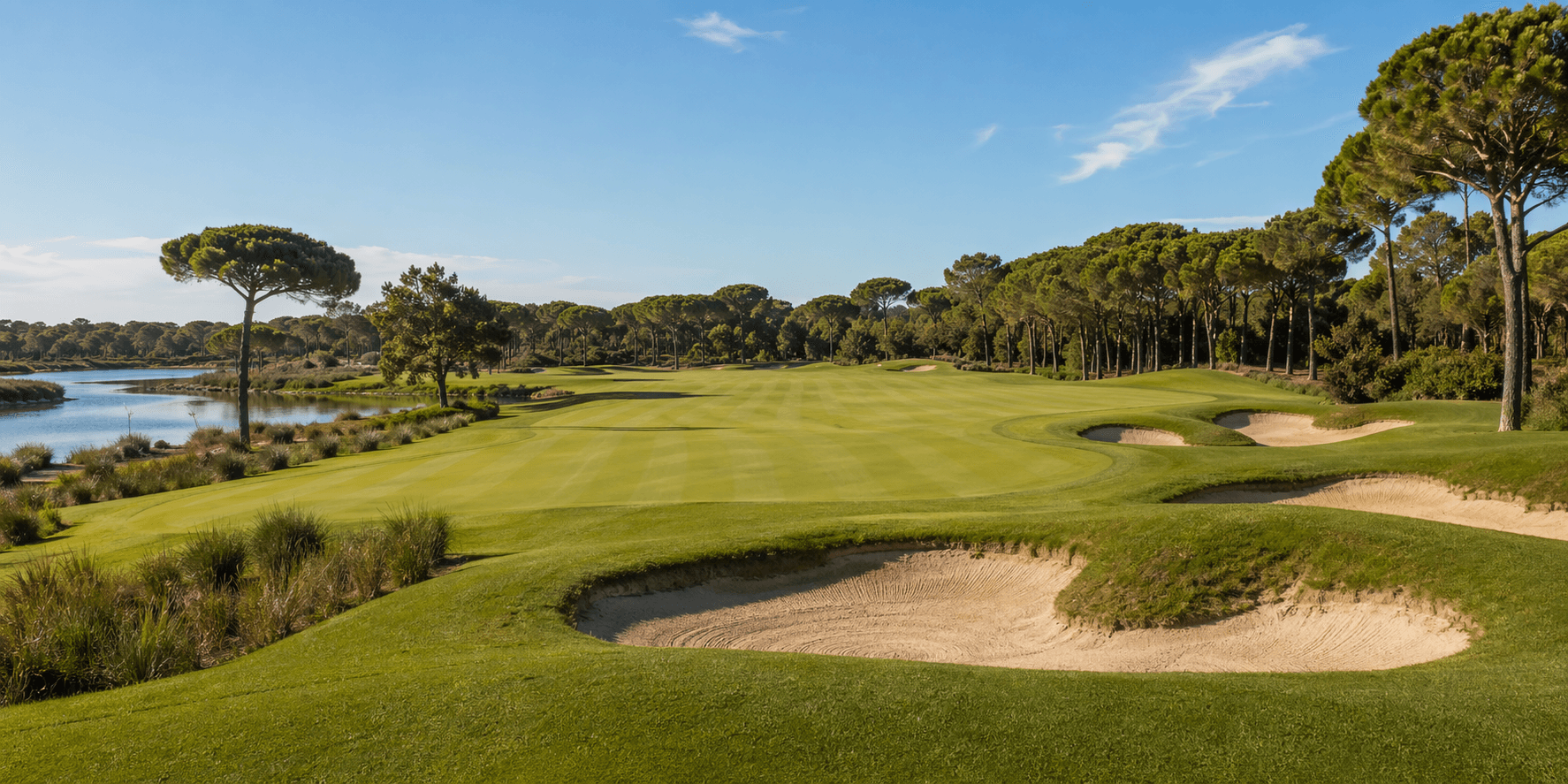
For a golf-focused trip, our editorial starting points are April–May and September–October. These months often balance comfortable afternoons with enough daylight for an unhurried round. They are also popular golf periods, so a shoulder-season beach holiday may coincide with high-season green fees. For a winter stay, start by comparing the Algarve and Costa del Sol; for a summer escape from southern heat, investigate the Lisbon and Silver Coasts.
The climate figures below are approximate, rounded station averages, not forecasts or limits on possible weather. Temperatures mean average daytime highs; rain figures mean average monthly totals, not rainfall during a round. AEMET's linked Spanish tables cover 1981–2010 and IPMA's Portuguese tables cover 1991–2020. These are broad planning references from different periods, not a precise comparison of today's course climates. Coastal exposure, elevation and distance inland matter.[1][2][3][4][5][6]
Chapter 02
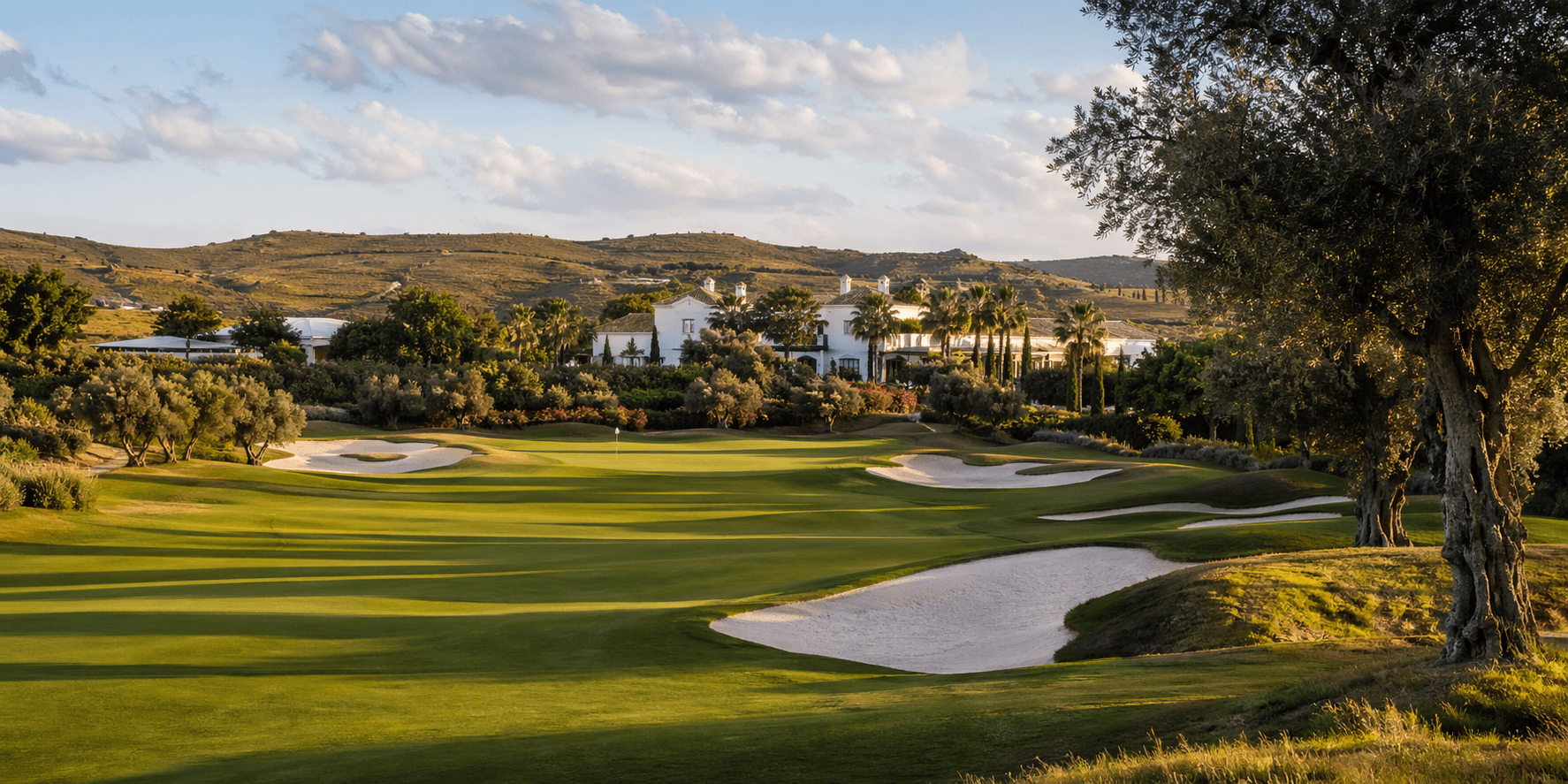
Costa del Sol and Sotogrande: mild winters, hot summers
Using Málaga as a broad Costa del Sol reference, daytime highs average roughly 17–18°C in December–February, 20–24°C in March–May, 28–31°C in June–August and 24–28°C in September–October. Monthly rainfall is approximately 60–100 mm in winter, 20–50 mm in spring and 0–10 mm in summer, rising again in autumn. These figures are not a Sotogrande forecast: the western coast can have different rain and wind exposure.[1]
Spring and autumn are sensible first choices for walking rounds. Winter can offer comfortable midday golf between unsettled spells; leave room to move a round after heavy rain. In summer, favour early starts and assess the actual forecast before choosing an afternoon slot. At exposed courses around Sotogrande, wind direction and strength can change the experience even on a sunny day.
Chapter 03
Algarve: a long playing season with a summer heat trade-off
Faro's averages suggest winter daytime highs of roughly 16–17°C, spring highs of 19–24°C, summer highs of 27–29°C and September–October highs of 23–26°C. Approximate monthly rain ranges from 40–90 mm in winter to 25–50 mm in spring and around 0–5 mm in summer; autumn becomes wetter. Hot spells can substantially exceed those temperature averages, and western, inland and exposed coastal courses differ.[2]
March–May and September–October often suit golfers seeking warm playing conditions, but are popular tariff periods. Winter is a credible option if you accept shorter days and rain interruptions. June and summer afternoon rates may offer a different balance of cost and comfort; compare the whole stay, since a lower green fee does not establish a cheaper holiday.[7]
Chapter 04
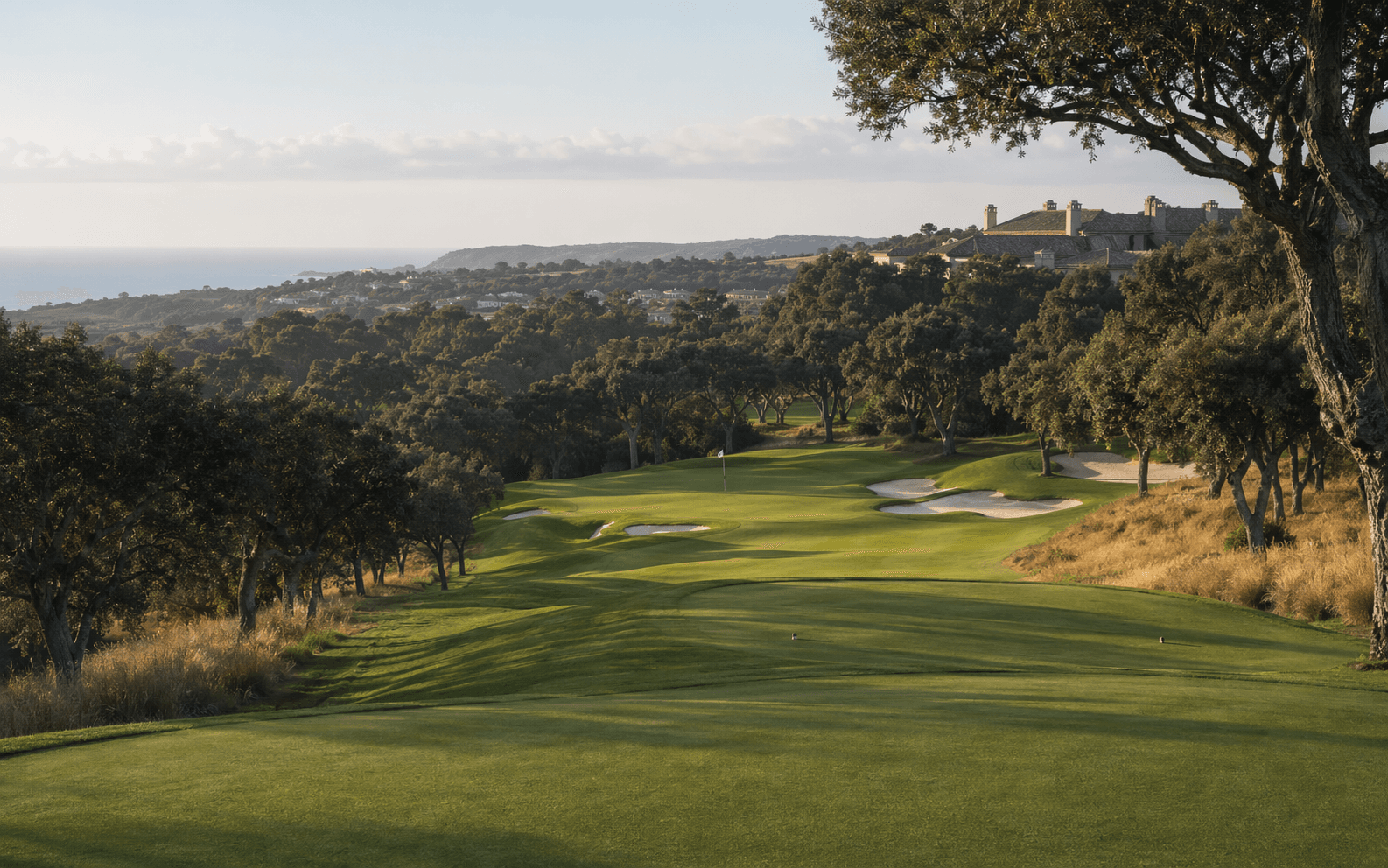
Lisbon Coast and Cascais: allow for the Atlantic
Lisbon provides a regional reference of roughly 15–16°C daytime highs in winter, 19–23°C in spring and 26–29°C in summer, with September–October around 23–27°C. Approximate monthly rainfall is 80–110 mm in winter, 60–70 mm in spring and 3–15 mm in summer; October–November can average around 110–135 mm. Cascais and exposed coastal fairways can be cooler and windier than the city station, while the Sintra side has its own microclimate.[3]
Late spring and early summer are worth comparing with autumn for a Cascais base. Summer coastal wind can keep an exposed round feeling cool without making it easy. Winter rain and Atlantic fronts require more flexibility than the temperature alone suggests. Ask about drainage and buggy restrictions after wet weather, especially if walking the course is not practical for your group.
Chapter 05
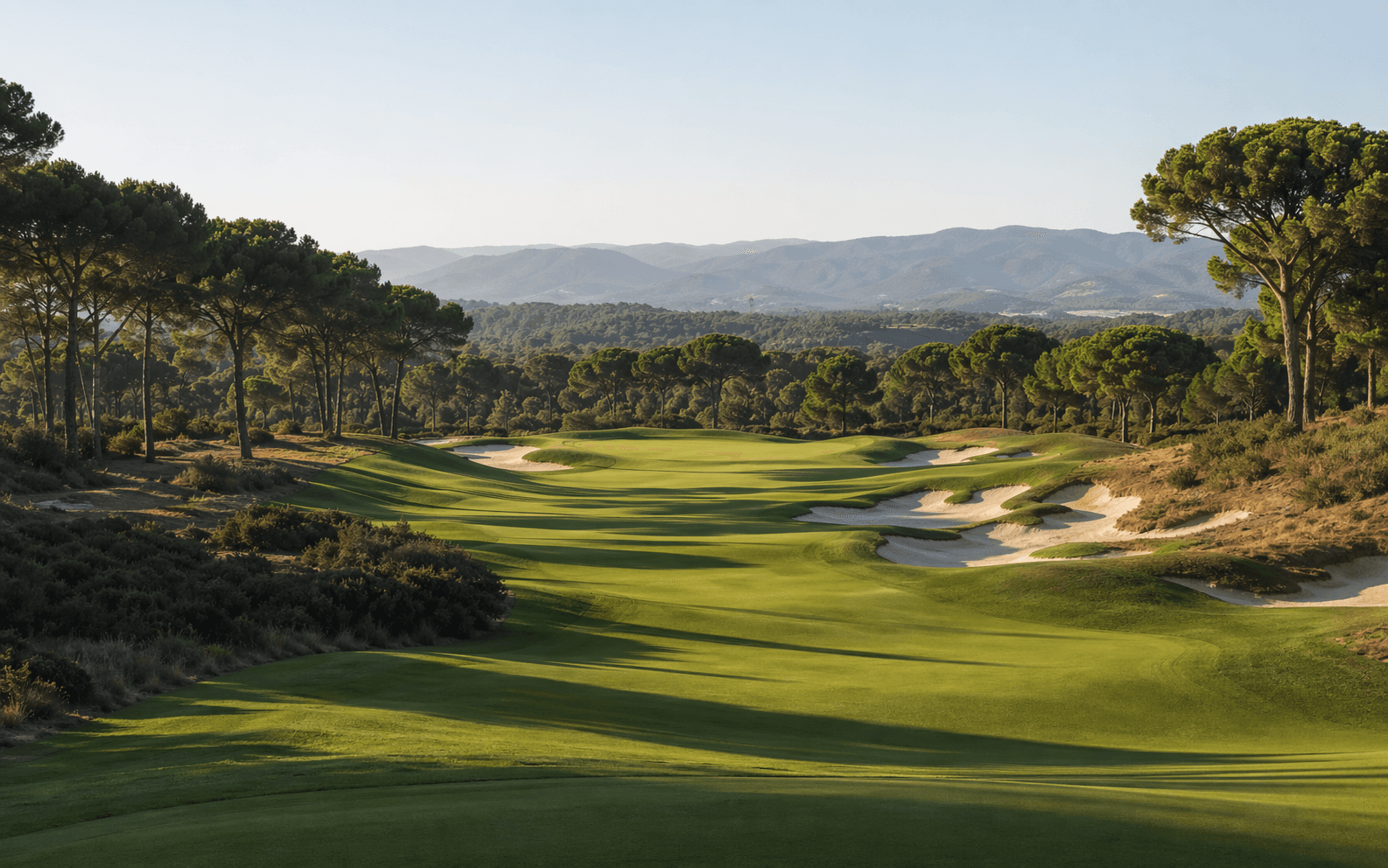
Silver Coast: cooler summer golf, more winter flexibility
At exposed Cabo Carvoeiro near Peniche, average daytime highs are approximately 15°C in winter, 16–18°C in spring, 20–21°C in summer and 20–21°C in September–October. Sheltered or inland courses can be warmer than this headland reference. Monthly rain is roughly 55–75 mm in winter, 35–50 mm in spring and 5–15 mm in summer, rising to about 85–100 mm in October–November.[4]
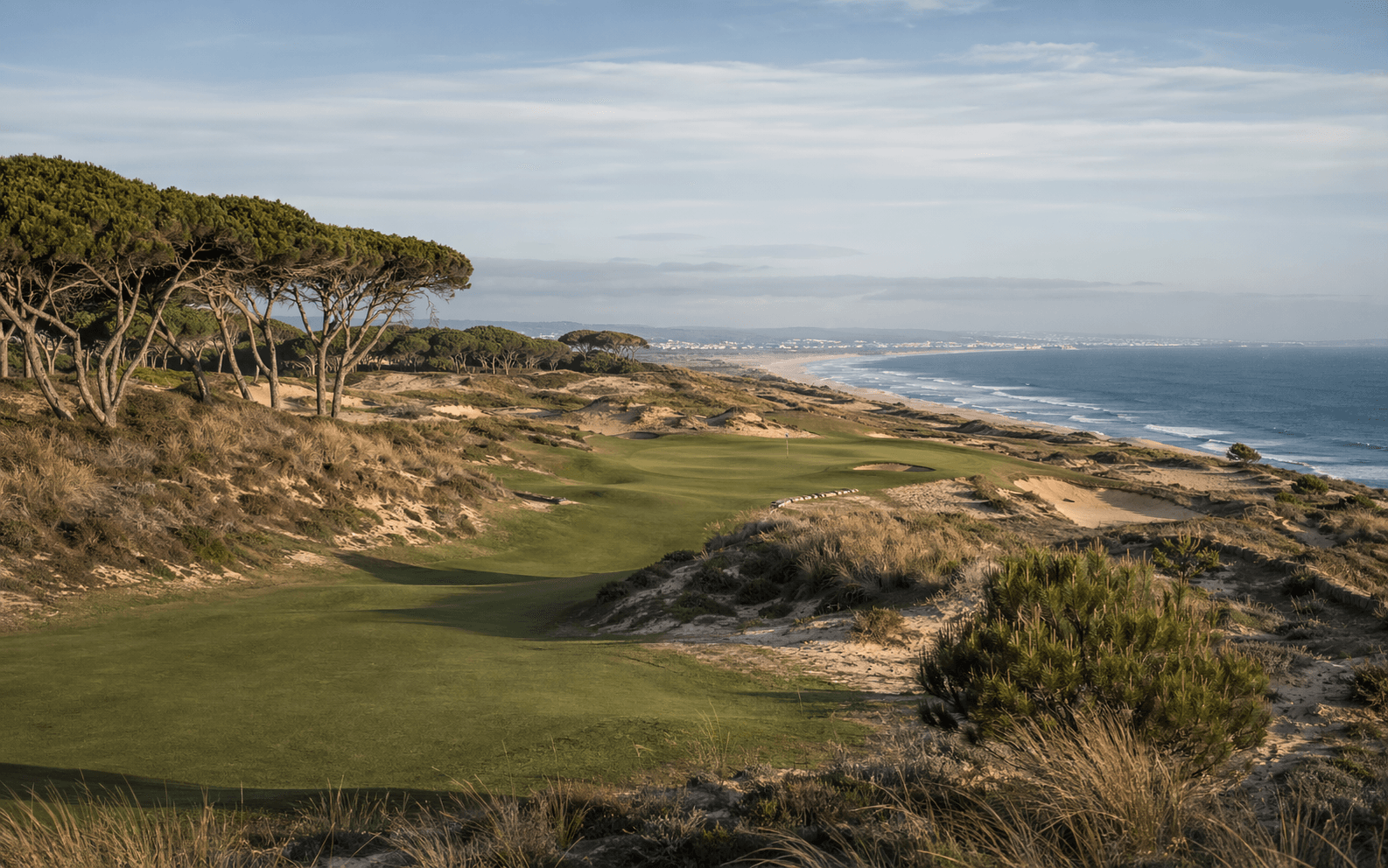
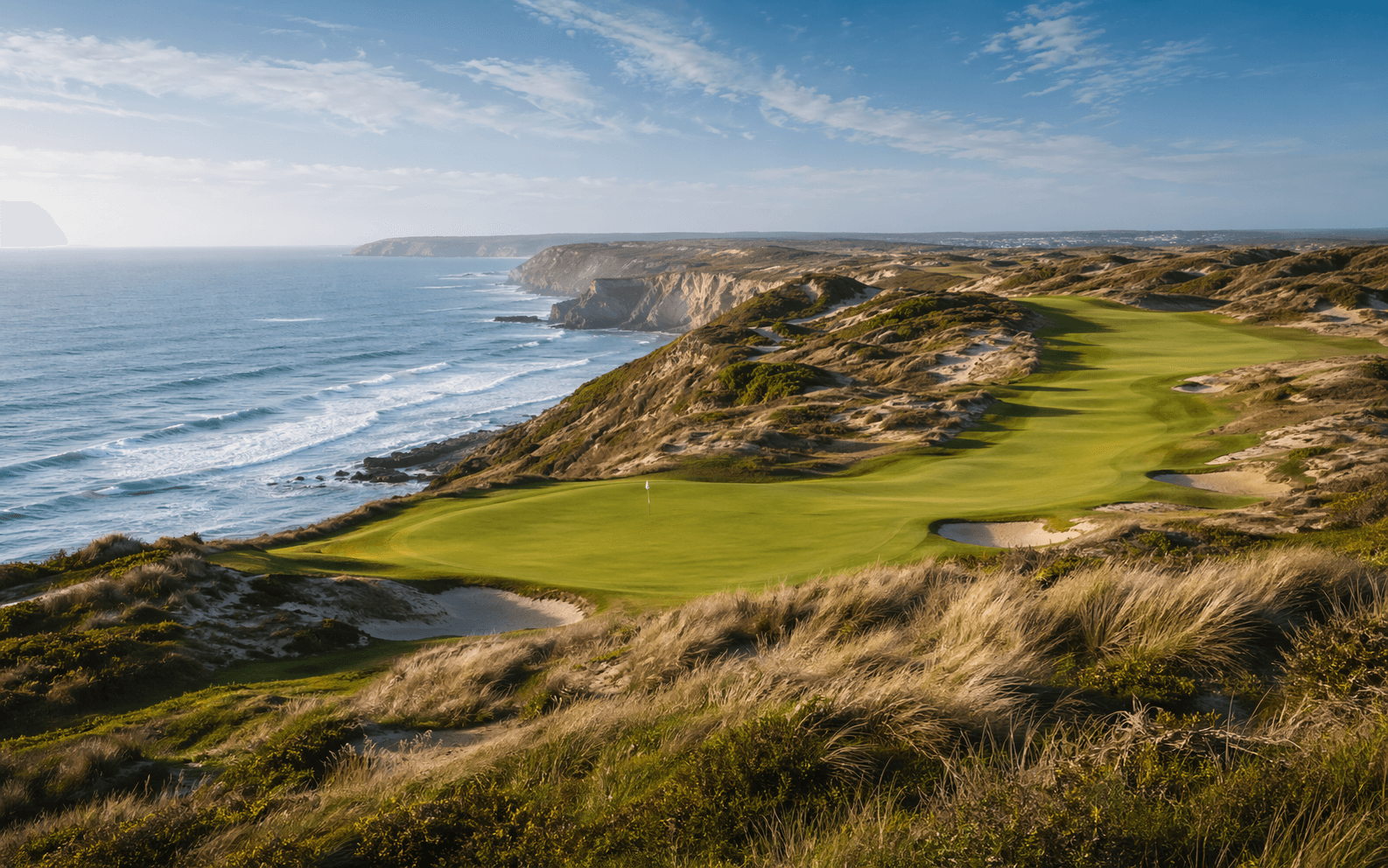
Late spring through early autumn is a useful starting window for West Cliffs, Praia D'El Rey and Royal Óbidos. Wind remains part of the decision. Winter golf is possible, but exposed rounds can feel much colder than the thermometer suggests. On Portugal's more northerly Atlantic bases, allow for wind, rain and occasional disruption rather than expecting the Algarve's winter pattern.
Chapter 06
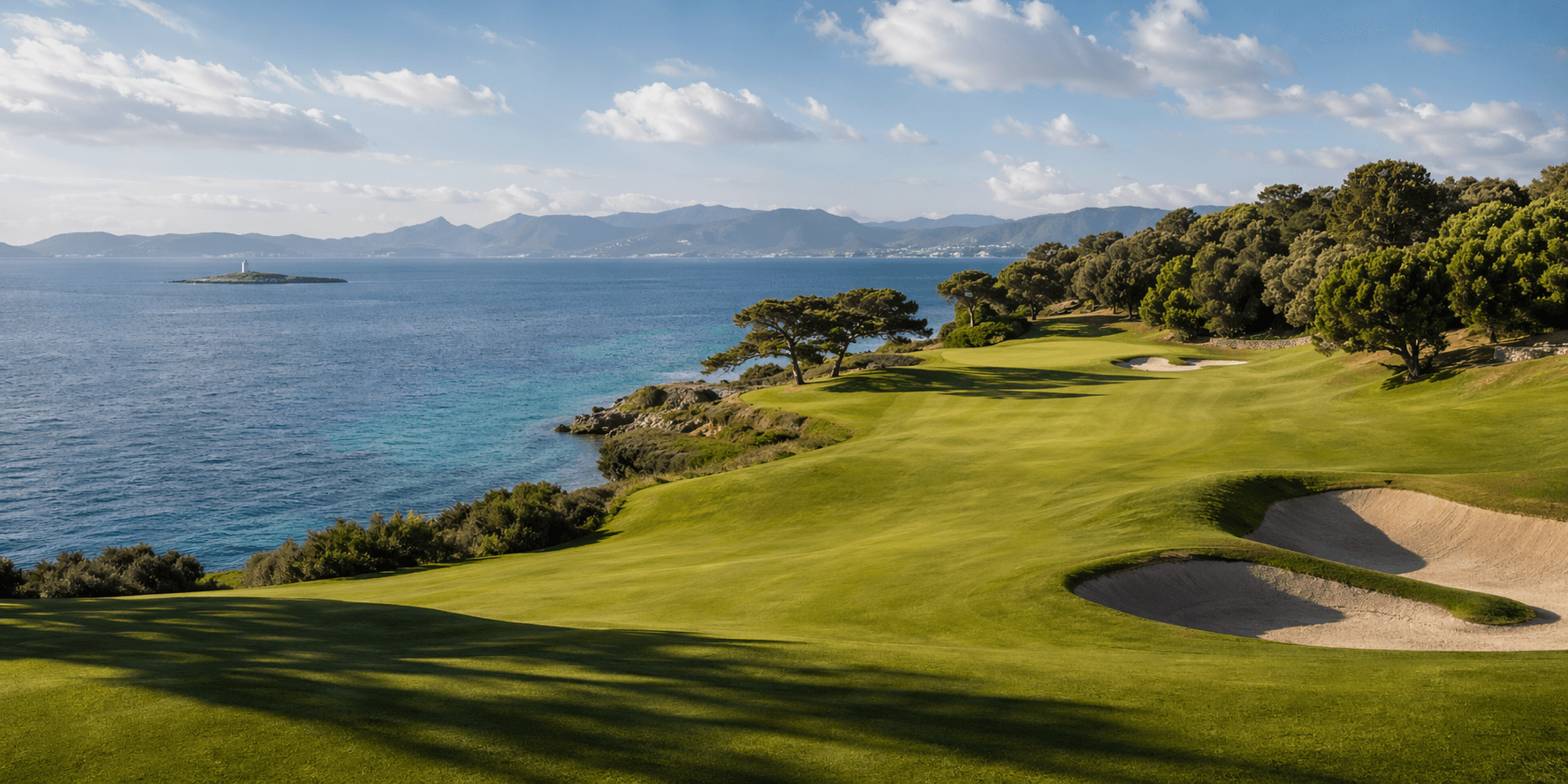
Mallorca: spring and autumn appeal, with autumn showers
Palma Airport averages suggest daytime highs of roughly 15–16°C in winter, 18–24°C in spring, 28–31°C in summer and 24–28°C in September–October. Approximate monthly rain is 30–50 mm in winter, 25–35 mm in spring and 5–20 mm in summer, increasing to around 50–60 mm in September–November. Rain and exposure vary across the island; autumn can bring heavy showers even when afternoons remain warm.[5]
April–May and September–October are appealing starting points for a golf trip. Alcanada's published tariff illustrates that spring and autumn golf can cost more than summer, with lower winter periods and holiday exceptions.[8] Treat this as a club example, not an island-wide promise. Summer rounds need the same heat and start-time judgement as southern mainland Spain.
Chapter 07
Girona and Costa Brava: distinguish coast from inland golf
Girona Airport's approximate daytime highs are 13–14°C in winter, 17–22°C in spring, 27–30°C in summer and 22–26°C in September–October. Monthly rain averages roughly 50–60 mm in winter, 50–70 mm in spring and 30–60 mm in summer, reaching about 70–90 mm in September–October. Unlike the Algarve, summer here is not reliably rain-free.[6]
Late spring and early autumn are useful choices, with warm summer rounds also possible if you plan around heat and thunderstorms. Winter mornings inland can bring frost delays; the northern Costa Brava can be exposed to strong winds. This is a different risk mix from winter rain on Portugal's Atlantic coast. A sunny coastal forecast does not establish conditions at an inland Girona course.
Chapter 08
High, shoulder and low season: how green fees tend to behave
Use these as planning patterns, not fixed tariff bands. In the Algarve and Costa del Sol, spring and autumn are commonly the main golf-demand periods. Shoulder windows can fall around late February, early June or late November, but the boundaries vary by club and year. Summer heat and parts of winter can bring lower visitor rates. Vale do Lobo's published seasonal tariff is one example of changing rates within the year, including differences within a month.[7]
Mallorca can follow a similar golf calendar, as Alcanada's tariff illustrates.[8] Around Lisbon, the Silver Coast and Girona, do not automatically label summer low season: coastal weather, resort demand and individual club policies can support a longer busy period. Compare exact dates, weekdays and tee-time categories. A shoulder month offers a possible compromise, not a guaranteed discount.
- ·High season: expect firmer green fees and less choice of preferred start times; confirm each club's current terms.
- ·Shoulder season: compare adjoining weeks, accepting less predictable weather or a possible maintenance overlap.
- ·Low season: weigh any lower rate against heat, shorter daylight, rain risk and the condition of the course.
- ·Compare like for like: number of holes, equipment, buggy inclusion, required supplements and cancellation terms can differ.
Chapter 09
Maintenance: check September–October, then ask about other windows
September–October is a typical autumn window to check for overseeding and hollow-tining in the Algarve and Costa del Sol, but it is not a shared closure calendar. Overseeding adds seed to establish or renew turf; hollow-tining removes small cores and is often followed by sand top-dressing. They need not happen together, and some clubs carry out major work in spring or summer instead. Published club schedules, such as Santana's and La Cala's, underline why a regional rule cannot establish your course's dates.[9][10]
Ask the club which greens, tees or fairways will be affected, whether temporary greens or closures are planned, and what recovery it expects before your round. Recovery depends on the work and growing conditions; reopening does not necessarily mean fully recovered putting surfaces. Reconfirm closer to travel, since weather can change the schedule. A reduced fee alone does not tell you whether the resulting experience will suit you.
Chapter 10
Summer heat and twilight rates
For hot summer days, an early start is usually the clearest way to reduce time in afternoon heat. Carry water, use sun protection and allow breaks. A coastal breeze does not remove sun exposure, and a twilight tariff can start while temperatures are still high. Choose a shorter round or another day if the forecast is unsuitable for your group.
Some clubs offer lower twilight or late-afternoon rates, with start times that change through the year. La Cala explicitly states that twilight does not guarantee completion of 18 holes; Alcanada also distinguishes afternoon products.[8][9] Check the start time, sunset, permitted number of holes and equipment-return deadline. In winter, the saving may come with particularly limited playing time.
Chapter 11
Quick month-by-month planning guide
This is an editorial summary of the regional climate references and tariff examples above, not a forecast or a universal price calendar. Use the regional notes to choose a base, then confirm weather, maintenance and fees for the actual dates.
- ·January: start with the Algarve or Costa del Sol for milder afternoons. Some winter rates are lower, but rain and short daylight constrain the plan; Girona mornings can be frosty.
- ·February: southern days gradually lengthen. Compare early and late-month tariffs; Atlantic rain and wind remain possible, and inland northern mornings can still be cold.
- ·March: southern spring golf becomes attractive and fees often rise. Mallorca and Girona are warming, but showers and cool starts remain part of the brief.
- ·April: a strong all-region starting point for comfortable rounds. Expect spring demand in the south and Mallorca, and keep a wet-weather alternative.
- ·May: compare every region, including Cascais and the Silver Coast. Days are long, southern temperatures are rising and popular golf tariffs may still be high.
- ·June: consider the Atlantic coasts for milder summer conditions. Some southern courses move towards lower rates; check heat and summer maintenance before choosing a slot.
- ·July: plan southern and Mallorca golf early. Summer or twilight offers may exist, but Lisbon and Silver Coast wind, and Girona heat or thunderstorms, still need attention.
- ·August: retain the early-start approach and compare the full holiday cost. A lower golf tariff can coincide with busy resorts; avoid assuming northern courses will be cool.
- ·September: temperatures begin easing, although early weeks can remain hot. Golf demand and fees often climb; check overseeding and hollow-tining dates directly.
- ·October: comfortable afternoons remain possible across the regions, with increasing rain risk and shorter days. Popular southern golf periods can overlap autumn maintenance.
- ·November: favour a flexible southern itinerary. Some tariffs ease later in autumn; Atlantic wind and rain make Lisbon and Silver Coast plans more weather-dependent.
- ·December: southern midday golf can work between wet spells. Check holiday tariff exceptions, limited daylight and frost risk if choosing inland Girona.
Chapter 12
If you are relocating: test a whole year of golf
Year-round playability means opportunities across the seasons, not uninterrupted access every day. The Algarve and Costa del Sol offer relatively mild winters but require a summer heat routine. Cascais and the Silver Coast trade some summer heat for greater Atlantic exposure. Mallorca needs winter and autumn weather flexibility, while inland Girona adds frost risk. Rent or visit in your least familiar season before choosing a permanent base.
Start membership enquiries before the move, then ask when the subscription year begins, whether fees can be prorated, how renewals work and whether there is a waiting list. There is no universal cheapest month to join. Confirm morning access in peak periods, competition days, guest rules, maintenance arrangements and any per-round charges. Quinta do Lago's FAQ, for example, describes different membership structures across its courses.[11]
Compare a realistic year of visitor rounds with the membership you can actually obtain, allowing for travel, heat, rain and weeks away. Do not assume buying beside a fairway includes membership or transferable playing rights. Test the ordinary journey to the club and the non-golf routine in winter as well as summer; the best holiday month need not identify the best place to live.