The course study
Overview
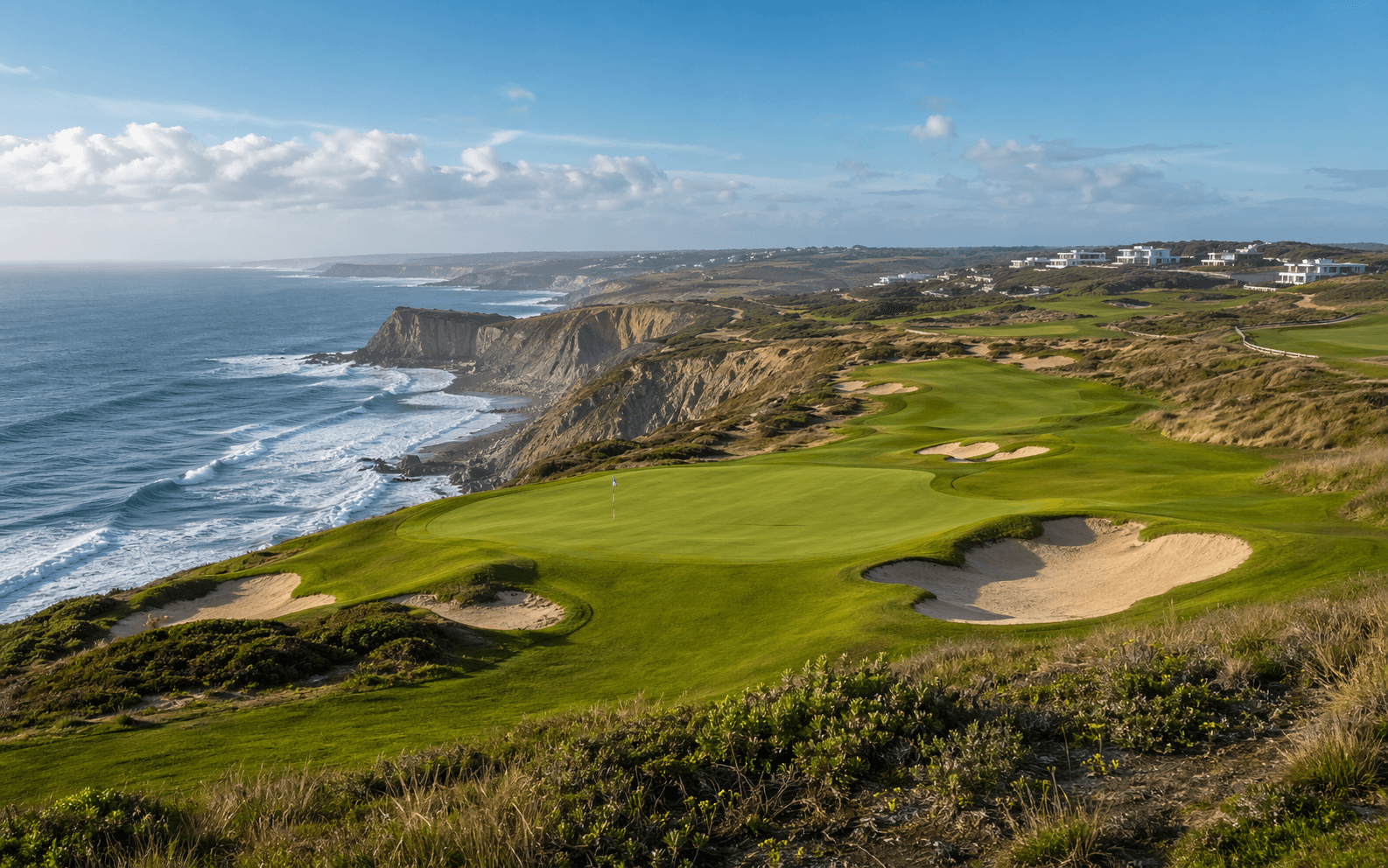
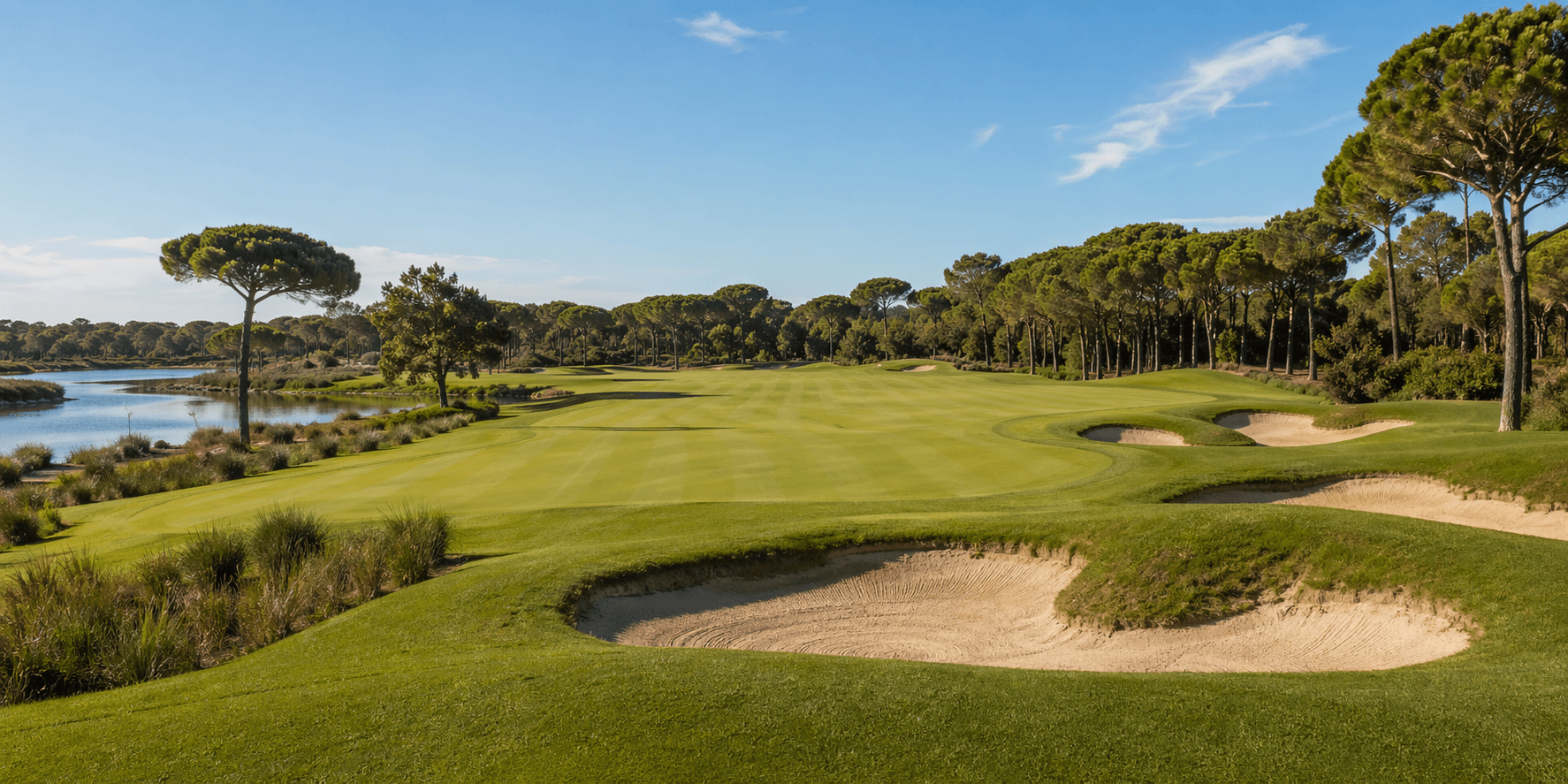
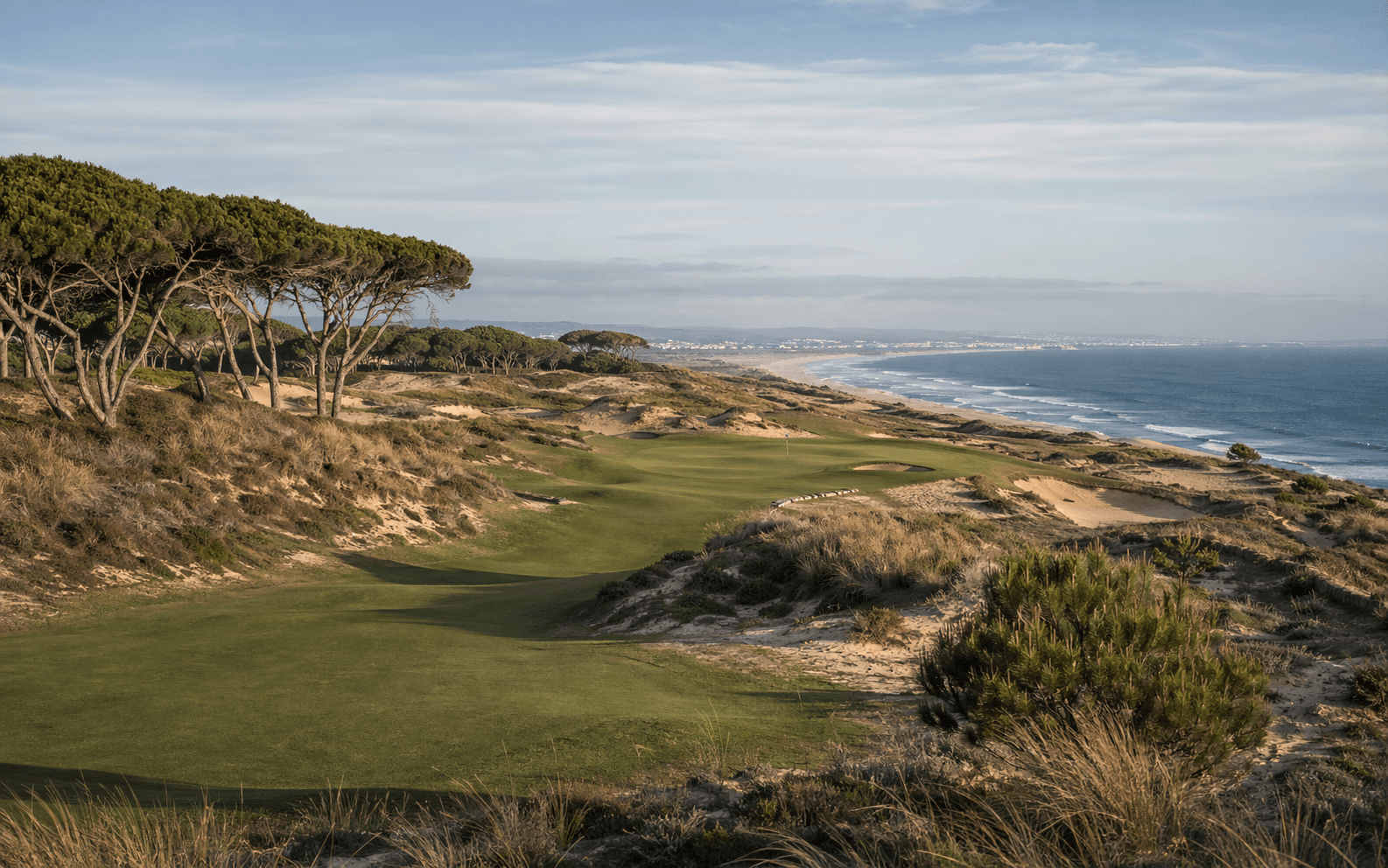
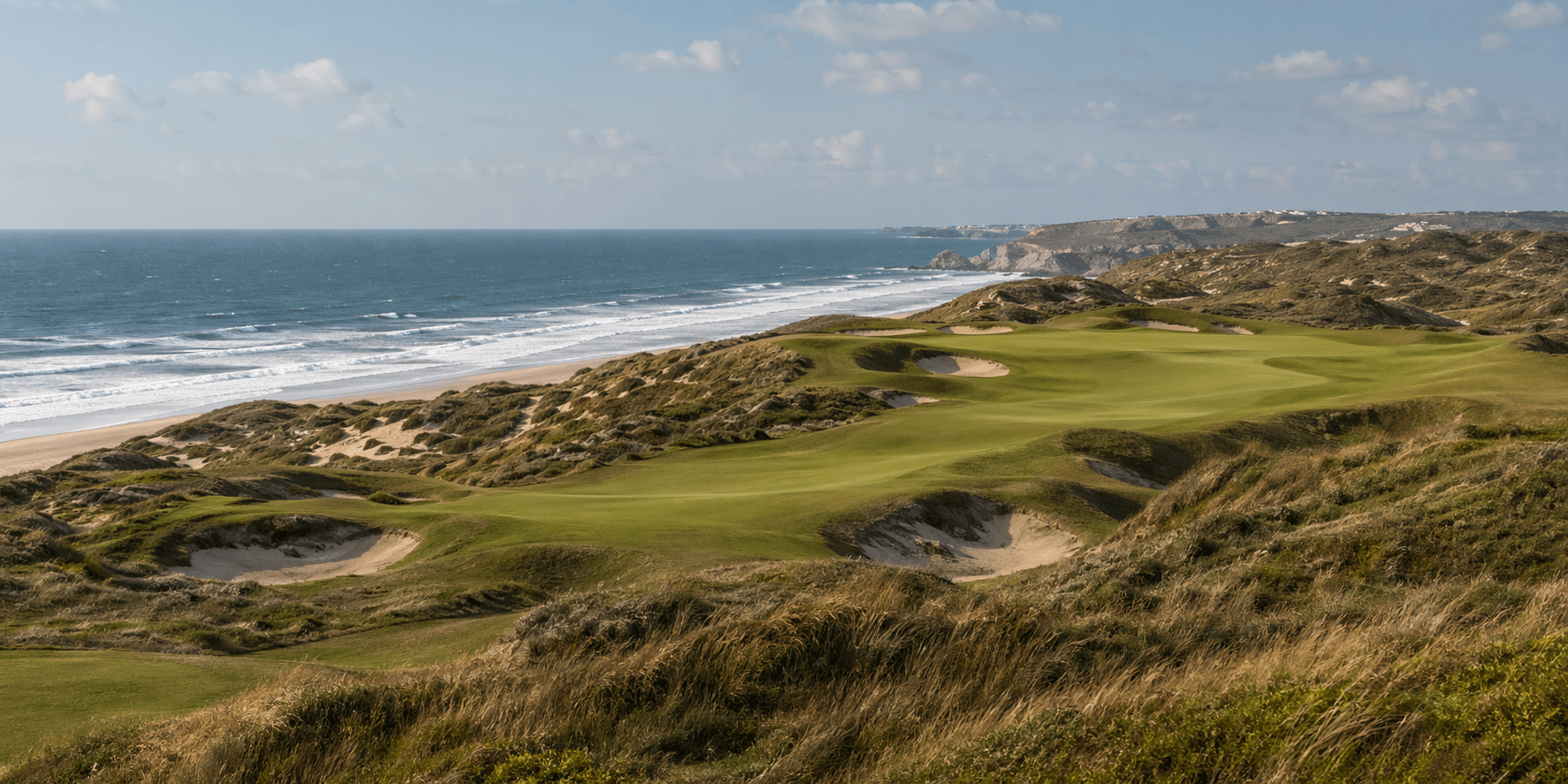
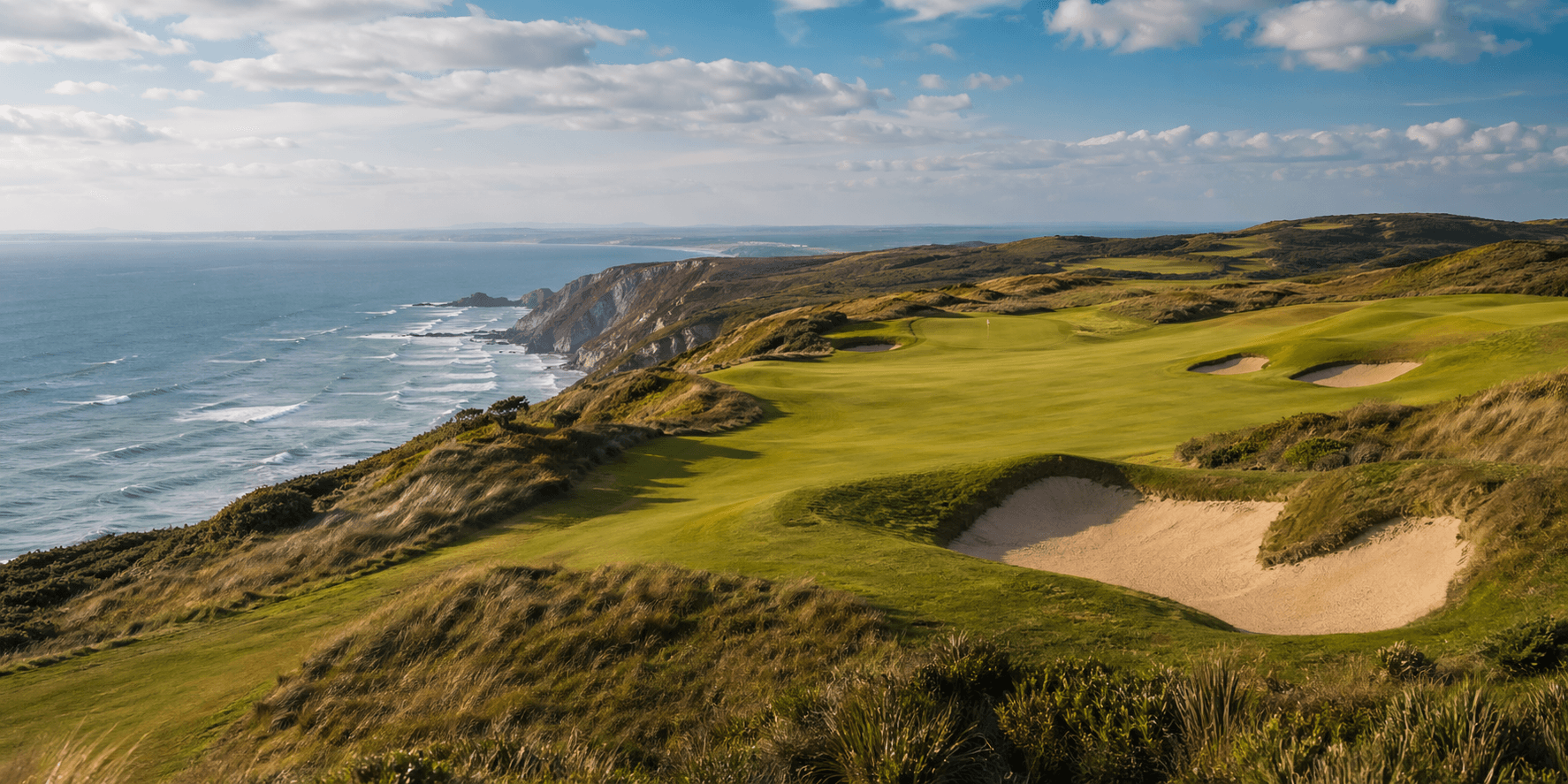
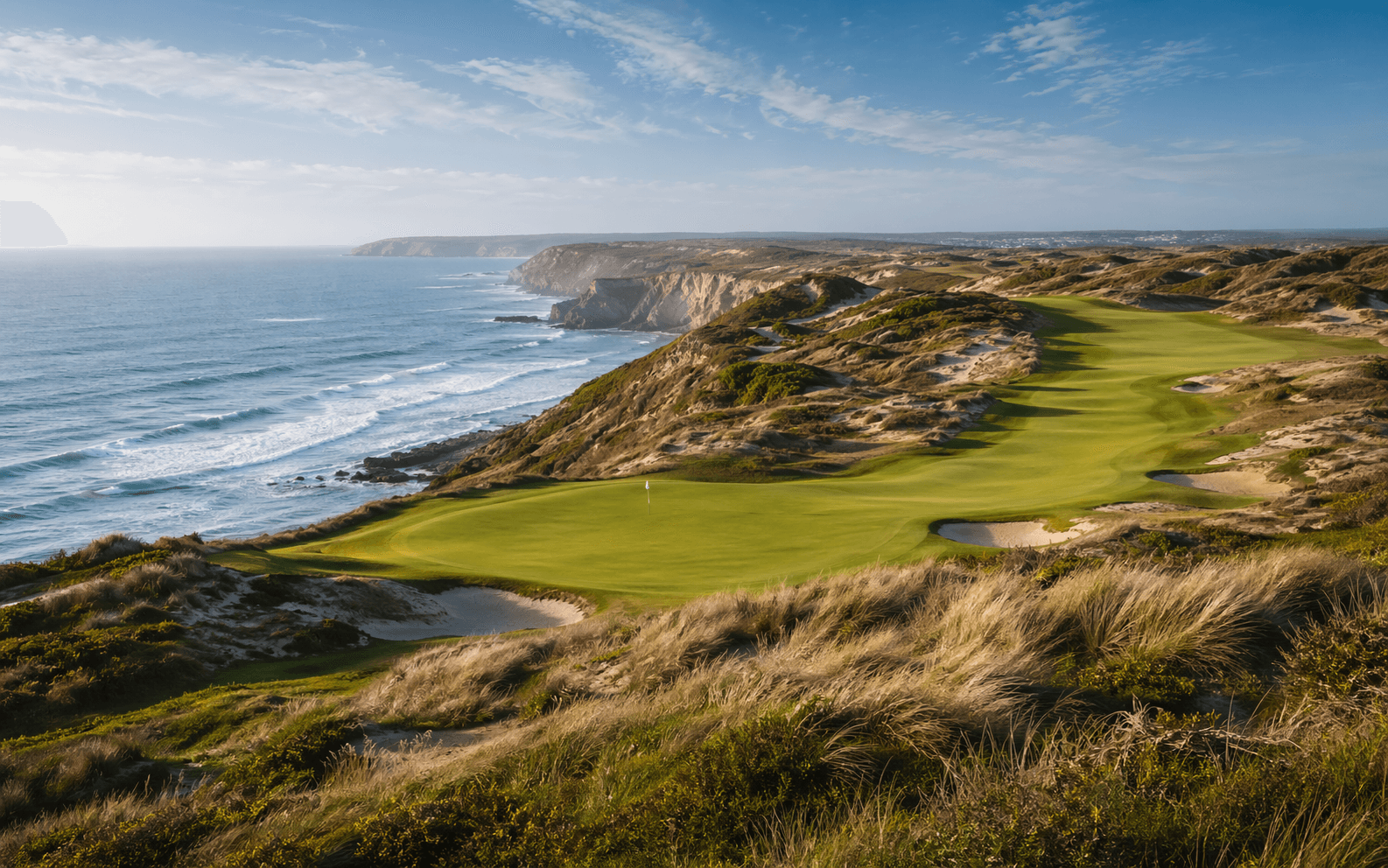
West Cliffs is the course that changed how international golfers talk about Portugal outside the Algarve. Designed by Cynthia Dye: niece and long-time protégée of Pete Dye: and opened in 2017 as part of the Praia D'El Rey / West Cliffs Ocean & Golf Resort complex on the Óbidos coast, it was pitched from the start as a proper links rather than a resort layout dressed in dunes clothing. The site, a rare stretch of raw Atlantic cliffs and sand dunes ninety minutes north of Lisbon, had been protected from development for decades and gave Dye the kind of canvas most modern architects never see: eighty metres of natural elevation change, a two-kilometre sea frontage, and genuine dunes movement from front to back.
The course has been ranked inside Portugal's top ten since it opened and, for players who care about architecture, is usually ranked higher than that. Golf World, Top 100 Golf Courses, and Rolex Golf have all had it in their top three Portuguese courses for multiple years. The conditioning has settled in since the early years: the fescue is now properly established, the firmness is genuine rather than aspirational, and the course now plays the way Dye intended it to play rather than the way a young course is forced to.
The experience
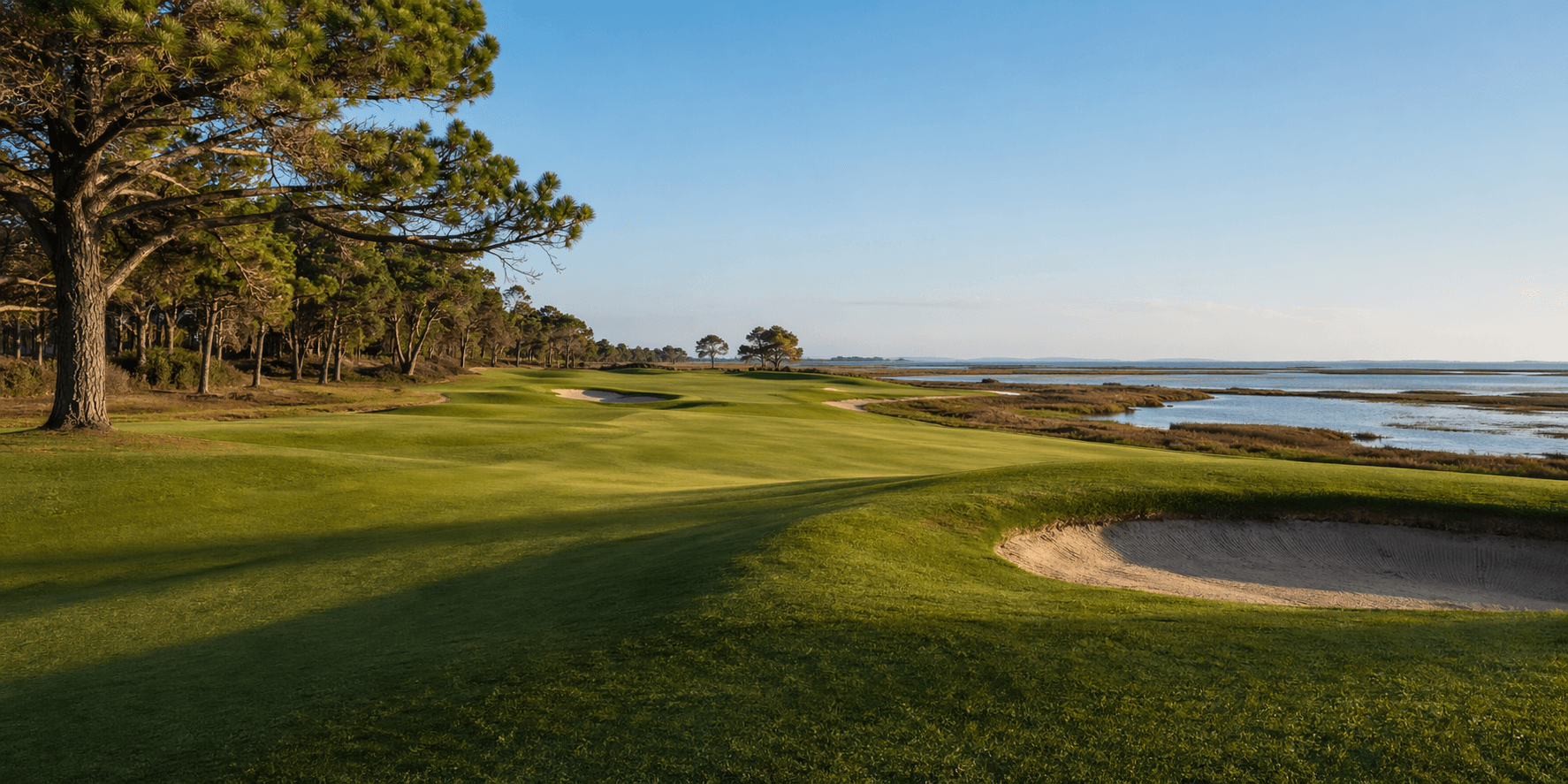
Playing West Cliffs is the closest thing in continental Europe to a proper Irish or Scottish links round. The wind is a constant co-designer: it almost always blows, often from two directions in a single round as it wraps around the cliffs: and the fairways are firm enough that the ground game is not an optional extra. Bump-and-run approaches are not just useful; they are frequently the smart play. Players who arrive expecting to launch high soft wedges into receptive greens are quickly re-educated.
The routing is genuinely memorable in a way that most resort golf in Portugal is not. Holes are individual rather than interchangeable, and the sense of place is strong throughout: the Atlantic is visible from the tee or green on eleven of the eighteen, and on the cliff-edge sequence in the middle of the round you can hear the surf from the fairway. Pace of play tends to be four to four-and-a-half hours in high season, which is the one logistical note that surprises visitors who assume Silver Coast means empty. The course holds a staff caddie programme and these are worth taking for first visits: the lines off the tee are more subtle than they look and the firmness means approach clubs are often two to three less than the pure yardage suggests.
Routing & design
Dye worked with the natural terrain rather than against it and the routing reflects it: holes trace the existing dune corridors, greens sit on natural plateaux, and the two ocean-edge stretches come as consequences of the topography rather than as manufactured set-pieces. The front nine climbs steadily from the clubhouse to the high cliff-edge at the 6th before working back inland, and the back nine drops to the sea again through the 12th-13th-14th sequence before climbing home through the dunes.
The defining design decision was the fescue. Unlike most Portuguese resorts that use bent or bermuda, West Cliffs is seeded with fine fescue across fairways and greens, which means the course plays firmer, faster, and more Irish than anything else in the country. Bunkering is revetted in the traditional links style rather than flashed like a modern American course, and the greens: mid-sized, with subtle internal contours and pronounced run-offs: are designed to reward the low approach. Total yardage of 6,382 off the back tees is misleading: the wind and firmness push effective length closer to 6,800 on typical playing days.
Key stretches
Holes 4–6: the first climb to the sea
A testing par-4 4th across a dune saddle, the strategic par-5 5th that climbs to the high point of the property, and the postcard par-3 6th with its infinity green above the beach. The first time the round commits fully to the coast and the round's early defining stretch.
Holes 12–14: the cliff-edge sequence
The back-nine's headline stretch. The par-4 12th returns to the ocean, the par-4 13th runs along the cliff with the fairway sloping toward the drop, and the short par-4 14th plays inland away from the cliff as a deliberate release. The wind is almost always cross here and club selection is rarely obvious.
Holes 15–18: the closing four
The long par-3 15th across a dune valley, the uphill par-4 16th through the highest dunes, the reachable par-5 17th, and the blind-second 18th back to the clubhouse. A genuinely strong closing four that rewards the player still thinking and punishes the player already counting.
Signature holes
The par-3 6th is the postcard: a downhill short-iron to an infinity green perched above a drop to the beach, with the Atlantic filling the horizon. The par-4 13th runs along the cliff edge with a fairway that slopes sharply toward the sea and demands a committed line off the tee. The long par-3 15th, played across a dune valley with the wind almost always crossing, is arguably the strongest single hole on the course for purists. And the reachable par-5 18th returns to the clubhouse uphill with a blind-shot second and a green perched above a gully: a genuinely dramatic closer that has decided more matches than its gentle shape suggests.
Hole by hole
The infinity short
The course's postcard hole. A downhill short-iron to a green perched above the drop to the beach, with the Atlantic as backdrop. The wind is always a factor and the club selection is almost never the same twice. Missing short leaves a nasty up-and-down from a shaved collar; missing long is the cliff.
The cliff-edge par-4
A mid-length par-4 running directly along the cliff with a fairway that slopes toward the sea. The safe line left leaves a longer, blinder approach; the brave line right flirts with the drop but opens the green. Dye's clearest Pete-inherited risk-reward hole.
The dune-valley long par-3
A long one-shot hole played across a dune valley with wind almost always crossing. The green is wider than it is deep and defended front-right by a pot bunker that plays much bigger than it looks. A genuine full-send long iron in wind: one of the purest shots on the course.
The blind-second closer
A reachable par-5 climbing back toward the clubhouse with a blind second over a ridge. The drive that finds the right-centre opens a clear line; anything left leaves a fully blind layup. The green is perched above a gully and a short approach is often a better result than a long one.
Practical information
The club's own 2025/26 public card (valid 16 November 2025 to 14 November 2026) is €130.35 for 18 holes from 16 November to 28 February and €189.75 from 1 March to 14 November. A public buggy is €50 for 18 holes. Book through the club portal or golfreception@westcliffs.com / +351 262 249 880. Confirm, because the card is subject to change. West Cliffs works as either the headline round of a Silver Coast trip or as a two-night side-trip from a Lisbon-based stay. From central Lisbon, the drive is ninety minutes on the A8; from Cascais, just over an hour. Tee times are easier to secure than most Algarve flagships: three to four weeks' notice is usually enough outside the busiest July-August windows: but the best morning slots disappear fastest because the wind tends to build through the day.
The course is genuinely year-round, though the best playing conditions fall from September to June. Winter can deliver glorious still mornings between storms; spring and autumn are the most reliable windows. Summer is warmer than the Algarve on the cliff-top but less humid, and the wind keeps conditions playable even in July. Buggies are available but walking is the intended experience and strongly recommended if physical shape allows: the course is walkable in three-and-a-half hours for a decent walker and the routing rewards it.
Who it suits
- •Players who love proper links golf and are happy to hit the ball low and run it in.
- •Golfers willing to walk and to play in wind: this course is considerably less rewarding in a buggy on a still day.
- •Visitors combining a Lisbon stay with two or three days of coastal golf rather than a week-long Algarve trip.
- •Architecture-minded travellers who want to see Portugal's most individual modern course.
Planning notes
- •Book a morning tee time: the wind builds through the day and the fescue is firmest after a cool night.
- •Walk if you can. The routing is designed for it and the buggy paths frequently miss the best views.
- •Pair with Oitavos Dunes for a two-round Lisbon-region links week; this is the country's strongest modern pairing.
- •Take a staff caddie on first visits: the lines off the tee are more subtle than they look and the firmness changes club selection.
- •Plan at least two nights on the Silver Coast: Óbidos, Peniche and the coastal villages reward the extra day.
Where to stay
The obvious base is on-resort. The Praia D'El Rey Marriott Golf & Beach Resort sits within the complex and is a reliable four-star hotel with direct course access, a strong spa, and a second course: Praia D'El Rey: also on the grounds. For self-catering groups, the West Cliffs Ocean Suites and the villa inventory across Praia D'El Rey are the most efficient way to house a foursome or more, with several properties offering direct cart-path access to the course.
For a more polished base, the Bom Sucesso Design Resort at Óbidos Lagoon is twenty minutes south and is genuinely design-led: architect-designed villas by the likes of Álvaro Siza. And if the trip wants a Lisbon-linked split, staying at one of the Cascais or Estoril seafront hotels (the Albatroz, the Oitavos, the Grande Real Villa Itália) and driving up on match days is an established pattern, especially when Oitavos Dunes is also on the itinerary.
Praia D'El Rey Marriott Golf & Beach ResortFour-star resort, on-complex
The obvious base. Direct cart access to West Cliffs and Praia D'El Rey, strong spa, and a full beach club below the cliffs. The right call for couples and pairs.
West Cliffs Ocean Suites & villasSelf-catering, on-resort
The villa and suite inventory scattered across the complex. The best option for groups of four or more: book through the resort's own rental programme for course access included.
Bom Sucesso Design Resort, Óbidos LagoonArchitect-led villas, twenty minutes south
A genuinely design-led resort with Siza-and-others-designed villas on the Óbidos lagoon. The right call if the trip also wants a quieter, more architectural base away from the golf.
Where to eat
The Silver Coast is quieter and less polished than the Algarve, which is part of its appeal. On-resort, the Dunas Restaurant at the West Cliffs clubhouse handles the post-round lunch better than most: Portuguese classics, a decent wine list, and a long terrace over the course. The Praia D'El Rey Marriott's main restaurant is reliable for dinner and has sea-view tables worth asking for.
The real reason to stay up here for a few nights is the surrounding region. Óbidos, fifteen minutes inland, is one of the prettiest walled villages in Portugal and Restaurante A Nova Casa de Ramiro is the long-standing benchmark for proper Portuguese cooking in a stone dining room with a wood fire. Further along the coast, Peniche is a working fishing town with genuinely excellent seafood: Nau dos Corvos is the scenic option and Marisqueira Mirandum the local one. For a long lunch, the beach restaurant at Praia del Rey (Moinho) is the default, and for something different, the sardine-and-wine shacks at São Martinho do Porto up the coast are worth the thirty-minute drive on a clear day.
Dunas Restaurant, West Cliffs clubhousePortuguese, course-view
The post-round lunch default. Portuguese classics, long terrace over the 18th, and a decent wine list. Not a destination dinner but the right stop straight off the course.
Restaurante A Nova Casa de Ramiro, ÓbidosPortuguese fine dining, old town
The long-standing benchmark for proper Portuguese cooking in the walled town fifteen minutes inland. Wood fire, stone dining room, traditional Ribatejo cooking.
Nau dos Corvos, Cabo CarvoeiroSeafood, cliff-top
Fresh fish and rice dishes on a dramatic cape-top terrace above the Atlantic. Twenty-five minutes up the coast and the right choice for a long scenic lunch.
Moinho Beach, Praia D'El ReyBeach lunch
The default post-round or next-day lunch on the sand below the resort. Grilled fish, white wine, and an afternoon on the beach.
The verdict
The single most characterful modern round in Portugal and the country's closest thing to an authentic British Isles links. Go with the right expectations: wind, firmness, walking: and it sits comfortably alongside Monte Rei at the top of any serious Portuguese golf trip.