The course study
Overview
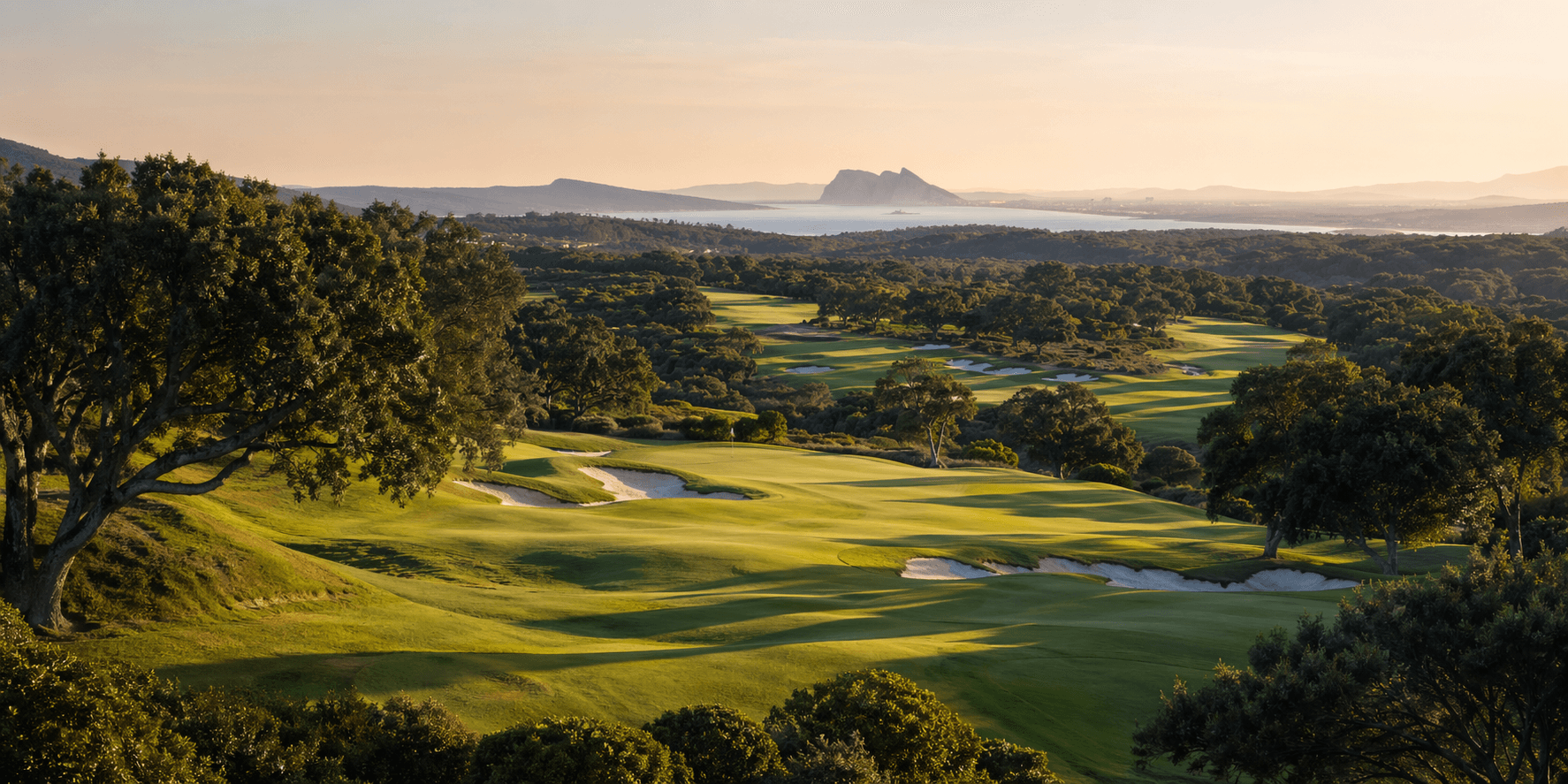
Real Club Sotogrande is one of the most important courses in Spain and arguably the purest expression of Robert Trent Jones Sr. on the mainland. Opened in 1964 as the first European design by Trent Jones, it predates Valderrama by twenty years and still carries a quiet authority that serious golfers immediately feel. It was the course that convinced Joseph McMicking, the Filipino-American industrialist behind the original Sotogrande development, that championship golf could anchor a new kind of Mediterranean estate — and it is the reason the corridor exists in the form it does today.
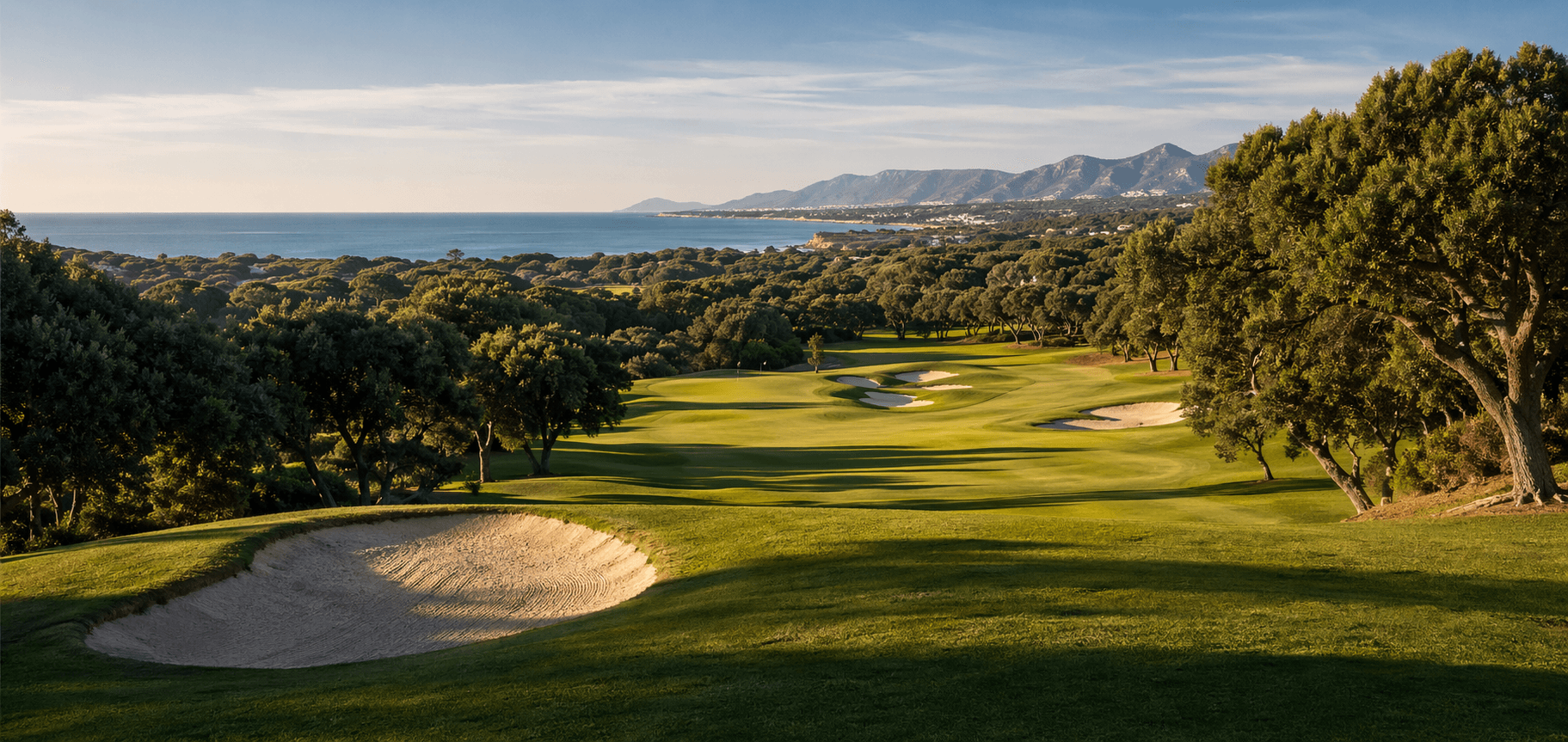
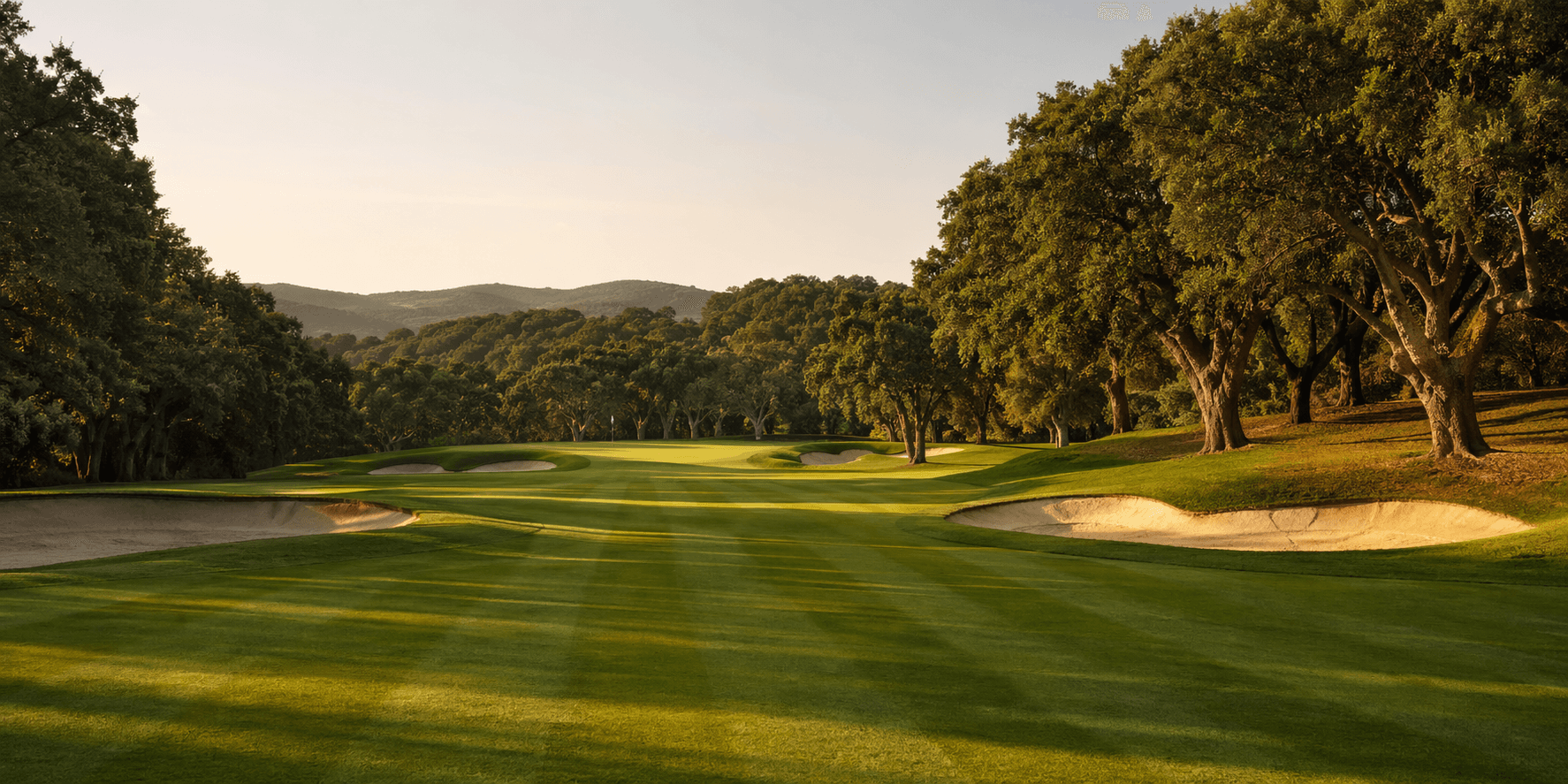
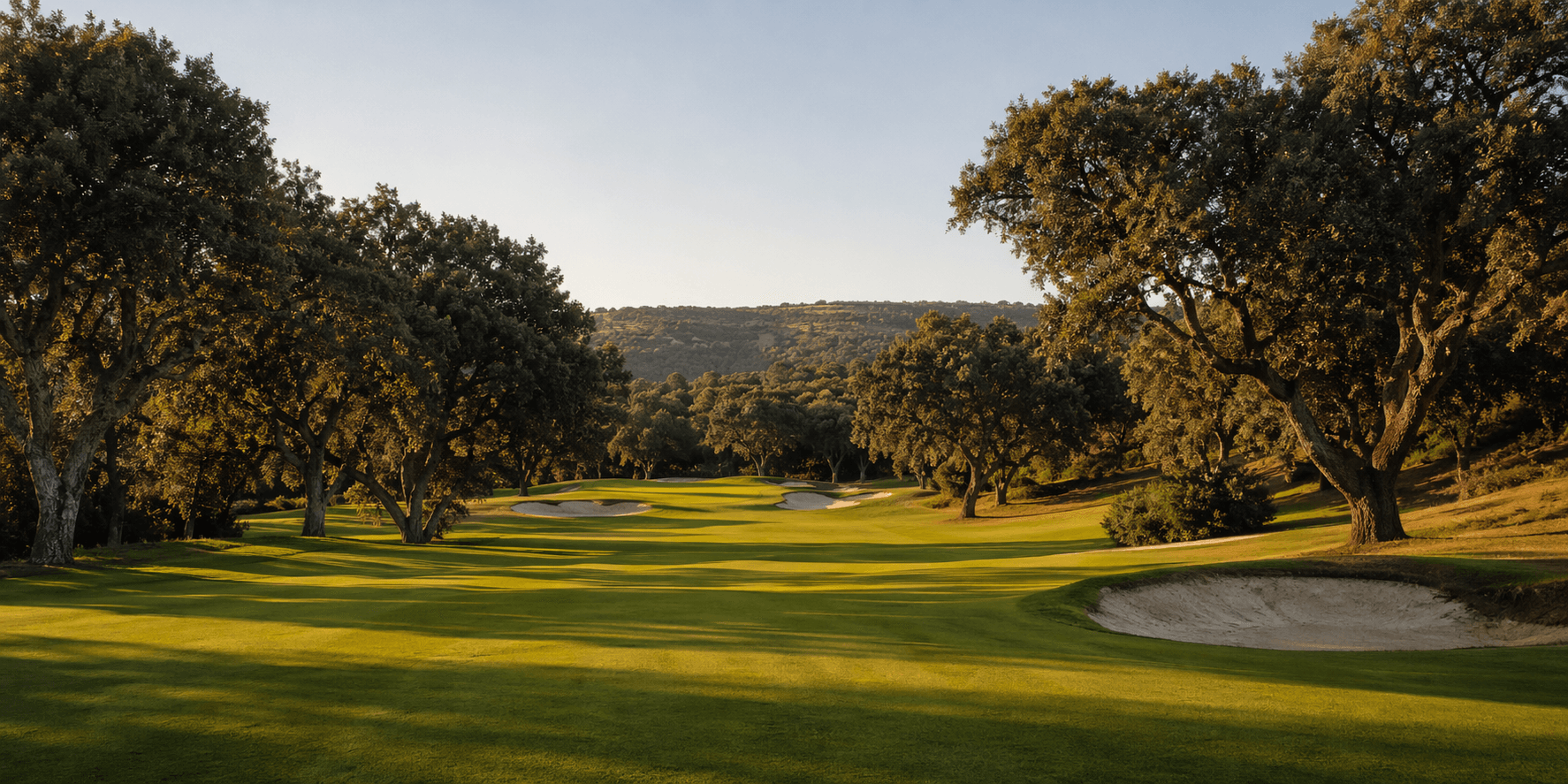
The terrain is gentler than its more famous neighbour, the corridors more open, and the strategy more subtle. But that does not make it less exacting. It is a course built on angles, preferred lines, and the need to think one shot ahead, with eucalyptus, cork oak and umbrella pine framing fairways that look wider than they play. The greens — rebuilt to USGA spec in recent years but preserving Trent Jones's original contouring — are the course's most underrated feature.
The experience
The experience at Real Club Sotogrande is less theatrical than Valderrama and all the better for it. The club atmosphere is calm, grown-up, and proper, the kind of place where the pace is unhurried and the pro shop staff know the members by name. The course walks beautifully across gently rolling ground, the conditioning is consistently sharp year-round, and the routing gives you room to breathe without ever feeling soft.
For golfers who appreciate architecture and restraint, it is one of the most satisfying rounds in Spain. The stretch through the front nine is a masterclass in how to build strategic interest without forcing it: no two holes feel alike, and the decisions off the tee matter more than the raw distance on the scorecard. This is the course Sotogrande regulars quietly prefer, and the one most tour professionals cite when asked what the corridor's best-kept secret actually is.
Routing & design
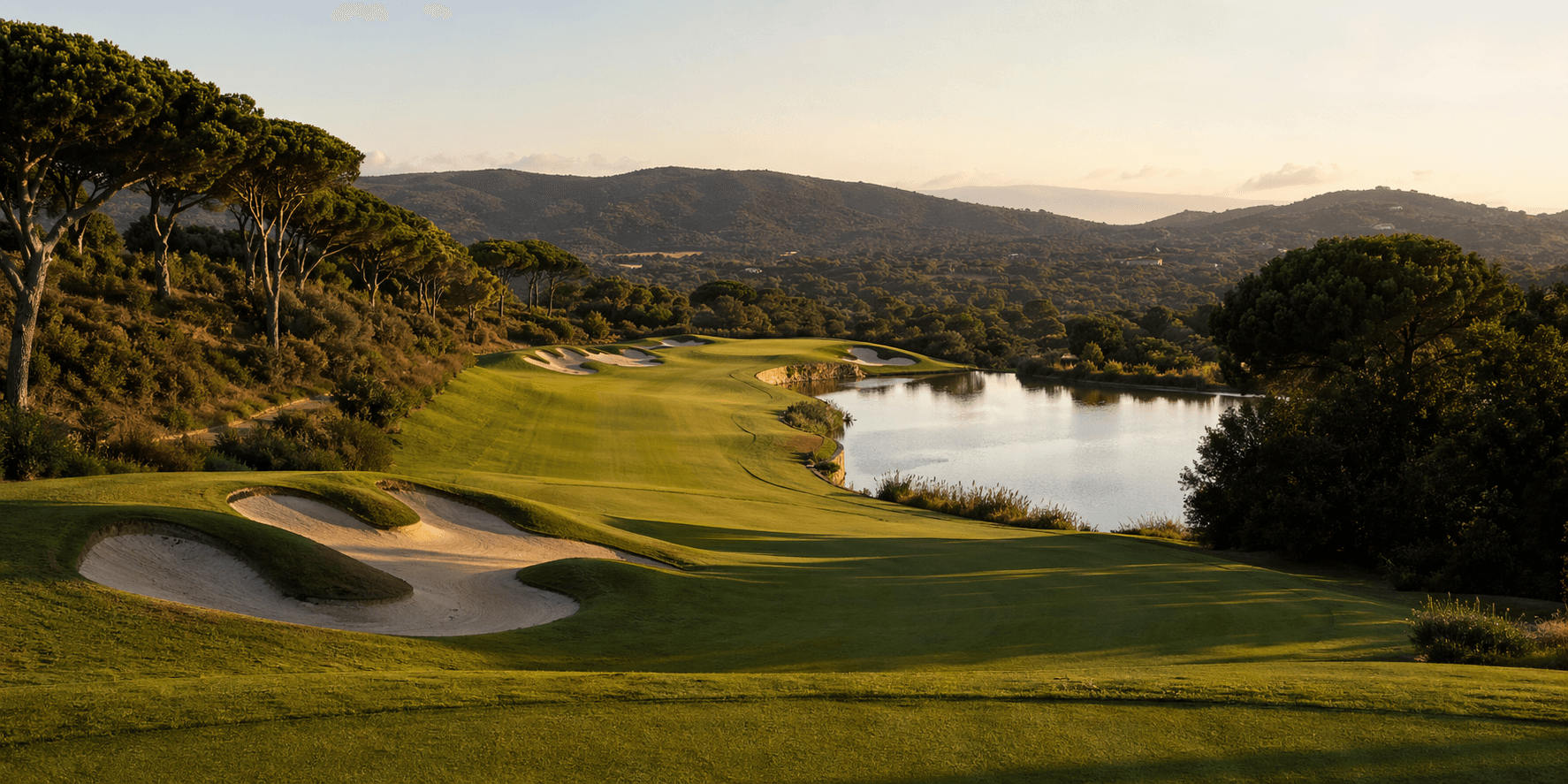
The routing moves out from the clubhouse across gently rolling ground, crosses the avenue on the par-5 2nd, and works its way through a classic out-and-back pattern that Trent Jones favoured in his early European work. The front nine feels slightly more open, the back slightly tighter. Corridors are framed by mature cork oak, umbrella pine and eucalyptus, with water coming into serious play only on a handful of holes — notably the 9th, 12th and 18th.
Greens are mid-sized, firmer than most Andalusian resorts, and read trickier than they look because most slopes subtly feed away from the natural approach angle. Bunkering is classical Trent Jones: flashed faces, narrow collars, and positions that force a specific preferred line off the tee. The course measures 6,711 yards but plays longer because the architecture rewards position over aggression.
Key stretches
Holes 1–3 — the measured opening
A gentle par-4 1st, the strategic par-5 2nd across the avenue, and a short par-4 3rd that tempts the big drive but punishes the miss. A three-hole start that asks you to commit to how you intend to play the whole round.
Holes 7–9 — the front-nine turn
The drivable par-4 7th, the mid-length par-3 8th, and the water-carry par-4 9th that plays back to the clubhouse. A short, dense, decision-heavy stretch where the card can turn in either direction.
Holes 15–18 — the elegant finish
The pine-framed par-3 15th, the long par-4 16th, the strategic par-4 17th, and the uphill par-4 18th finishing below the clubhouse terrace. A closing sequence built on pressure rather than theatrics — exactly what Trent Jones intended.
Signature holes
The par-5 2nd sets the tone early, asking for a shaped drive around a stand of cork oaks and a disciplined lay-up if you want the best angle into a green tucked behind a ridge. The short par-4 7th is all about positioning — the green can almost be driven but the bunkering rejects anything less than perfect. The par-3 15th, playing slightly downhill to a green ringed by pines, is one of the most photographed short holes in Spain. And the closing stretch, particularly the long par-4 17th and the uphill par-4 18th, is full of elegant pressure rather than brute force.
Hole by hole
The estate-avenue par-5
A brave tee shot over the estate avenue sets up a strategic lay-up to the preferred angle. The green is tucked behind a low ridge and defended by deep front-left bunkering. A hole that tells you immediately how Trent Jones wants the course played.
The tempting short par-4
Drivable for the long hitter in the right wind, but the bunkering rejects anything short or wide. The smart play is a mid-iron to 110 yards and a full-wedge approach, which is harder than it sounds because the green is crowned and releases toward a back slope.
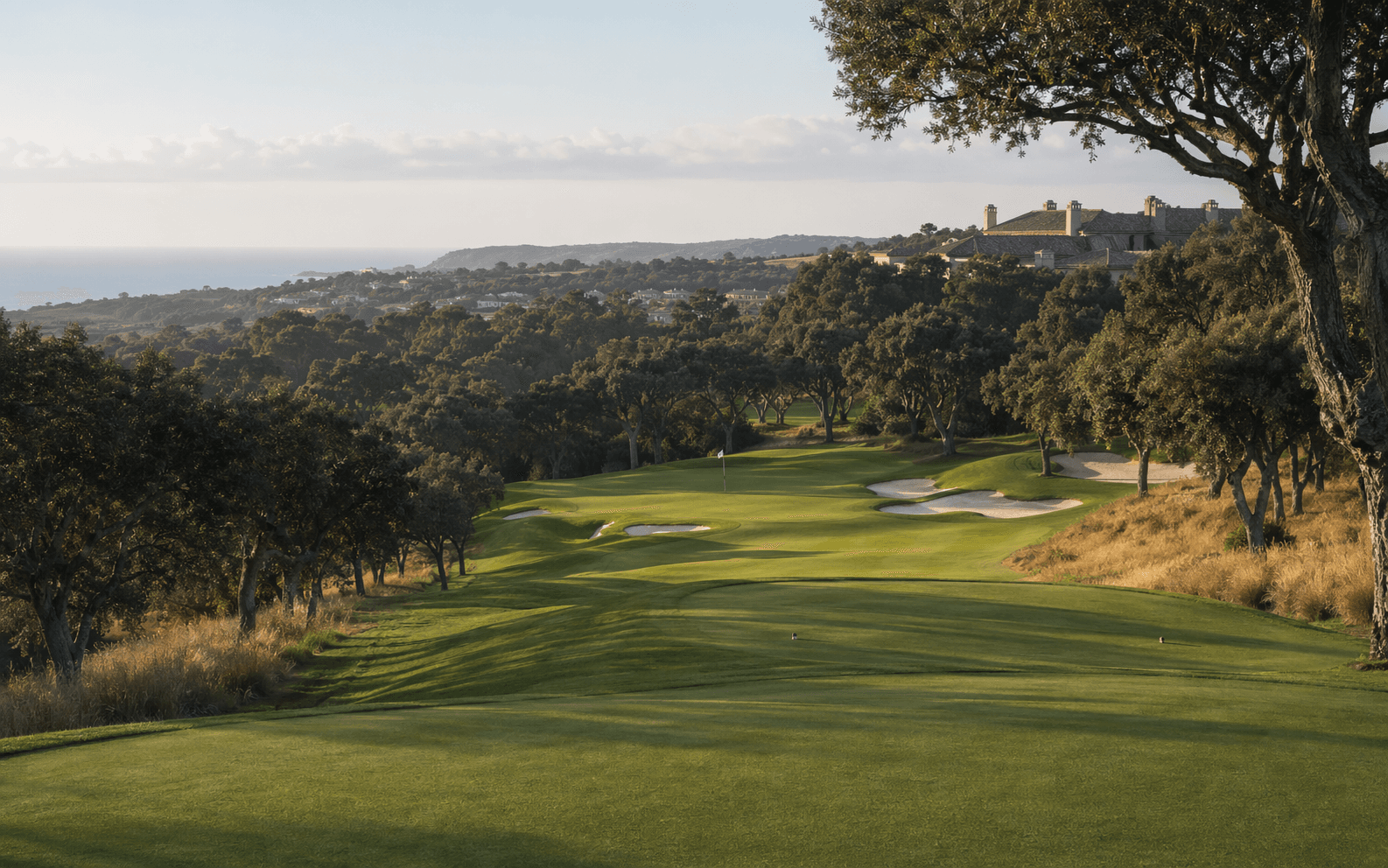
The photographed par-3
A mid-length downhill short hole to a green ringed by umbrella pines. The most photographed hole on the course and the moment on the round when the club's restraint is most obvious — no theatre, just a beautifully framed golf shot.
The uphill closer
A long par-4 rising to a green just below the clubhouse. The drive must carry a fairway bunker on the left to open the angle; the approach is one of the longest of the day into a green that rejects the under-hit second. A proper finishing hole.
Practical information
Real Club Sotogrande is a private members' club and does not publish a public 2026 rate card. Third-party operators quote figures that do not agree with each other, so this page will not invent a number. Ask the club for the day's green fee before you hold the flight. The direct line is +34 956 78 50 14; the email is info@golfsotogrande.com.
Visitor access is limited and usually easier midweek than at the weekend. Confirm handicap limits, the day's window, and whether a caddie is available when you write. Dress in the clubhouse is smart — collared shirt, tailored shorts or trousers, no denim.
Walking is the right way to play the course. Caddies are worth considering for a first visit. Buggies are available and sometimes required in the hottest months. Best conditions are from October to May. Late-afternoon light between 15:00 and sunset is when the course looks its best.
Who it suits
- —Architecture-minded golfers who want the purest Trent Jones experience in Europe.
- —Players who prefer walking with a caddie to riding a buggy.
- —Visitors who value atmosphere and restraint over theatre and signature-hole photographs.
- —Guests happy to book six to eight weeks ahead and engage properly with the club's etiquette.
Planning notes
- —Write to info@golfsotogrande.com or call +34 956 78 50 14 and ask for the day's green fee. Do not trust an operator list.
- —Book Valderrama first if both clubs are on the card — its visitor window is narrower.
- —Take a caddie on a first visit. The green reads are subtler than most visitors expect.
- —Pair with Valderrama for the contrast — both are Trent Jones, but the club cultures could hardly be more different.
- —Leave an extra hour for clubhouse lunch on the terrace. This is not a course to play, change, and leave.
Where to stay
SO/ Sotogrande is the obvious base and keeps the wider corridor open, with ten-minute transfers to the first tee. Private villas in the old Sotogrande estate work particularly well for groups who want multiple rounds in the area — the estate's gated roads put you within a few minutes of every course in the cluster.
If the trip includes Finca Cortesin as well, a split stay between SO/ Sotogrande and Hotel Finca Cortesin can make sense and gives each property three or four nights, which is roughly the right length to settle in. The Almenara Hotel, inside Sotogrande itself, is a quieter alternative with its own short course and a more traditional feel.
SO/ SotograndeFive-star resort
The default base for visiting golfers. Ten minutes from Real Club Sotogrande's first tee, with spa and two courses of its own on-site.
Private villas, Sotogrande old estateGroup stay
The most discreet way to stay in the corridor, and a short walk or drive from the club. Best for foursomes and families who want privacy and a pool.
Almenara HotelQuieter, traditional
A smaller, calmer alternative within Sotogrande itself. Less design-forward than SO/ but preferred by some regulars for its pace and its staff continuity.
Where to eat
Keep dinners in Sotogrande simple and good. The marina has reliable seafood options — Ke Marina for grilled fish, Mara for the old-school marisquería experience, and Midorie for the lighter modern evenings. The hotel restaurants at SO/ Sotogrande are strong enough that you do not need to overcomplicate the evenings, especially Cancha for a quieter course-view dinner.
Clubhouse lunch after the round is worth making time for — the traditional menu of croquetas, gazpacho and grilled lamb on the terrace is exactly the right register after this course. For a special dinner, the short drive to Casares gives you Kabuki Raw at Finca Cortesin, or head the other way into Tarifa for the Atlantic-side seafood rooms that feel like a completely different country.
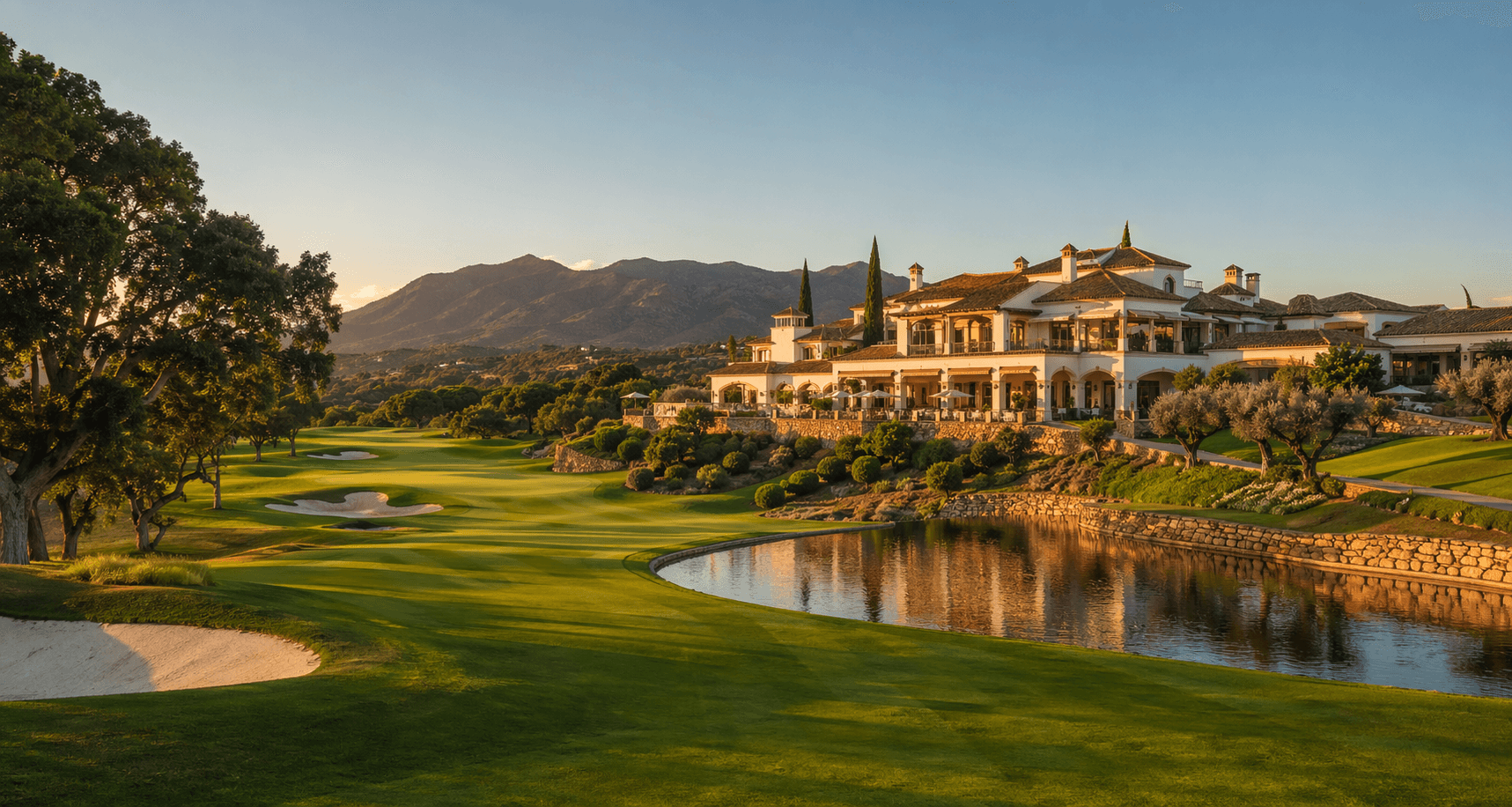
Real Club Sotogrande clubhouseClub lunch, traditional
Lunch on the terrace after the round is part of the experience. Order the croquetas, the gazpacho, and the grilled lamb. Linger.
Ke Marina, Puerto SotograndeMarina seafood
The reliable long-lunch room at the marina. Rices, grilled fish, and a glass of something cold.
Midorie, Puerto SotograndeContemporary, lighter evening
Modern Mediterranean with Asian touches. The right call for the nights when you want something less heavy after the round.
Mara, Puerto SotograndeClassic marisquería
Old-school Andalusian seafood room. Shellfish towers and straightforward grilled fish, exactly as it has been for decades.
The verdict
The purest strategic round in Sotogrande and the course most regulars would secretly choose over Valderrama. Book it, walk it, and respect the restraint.