The course study
Overview
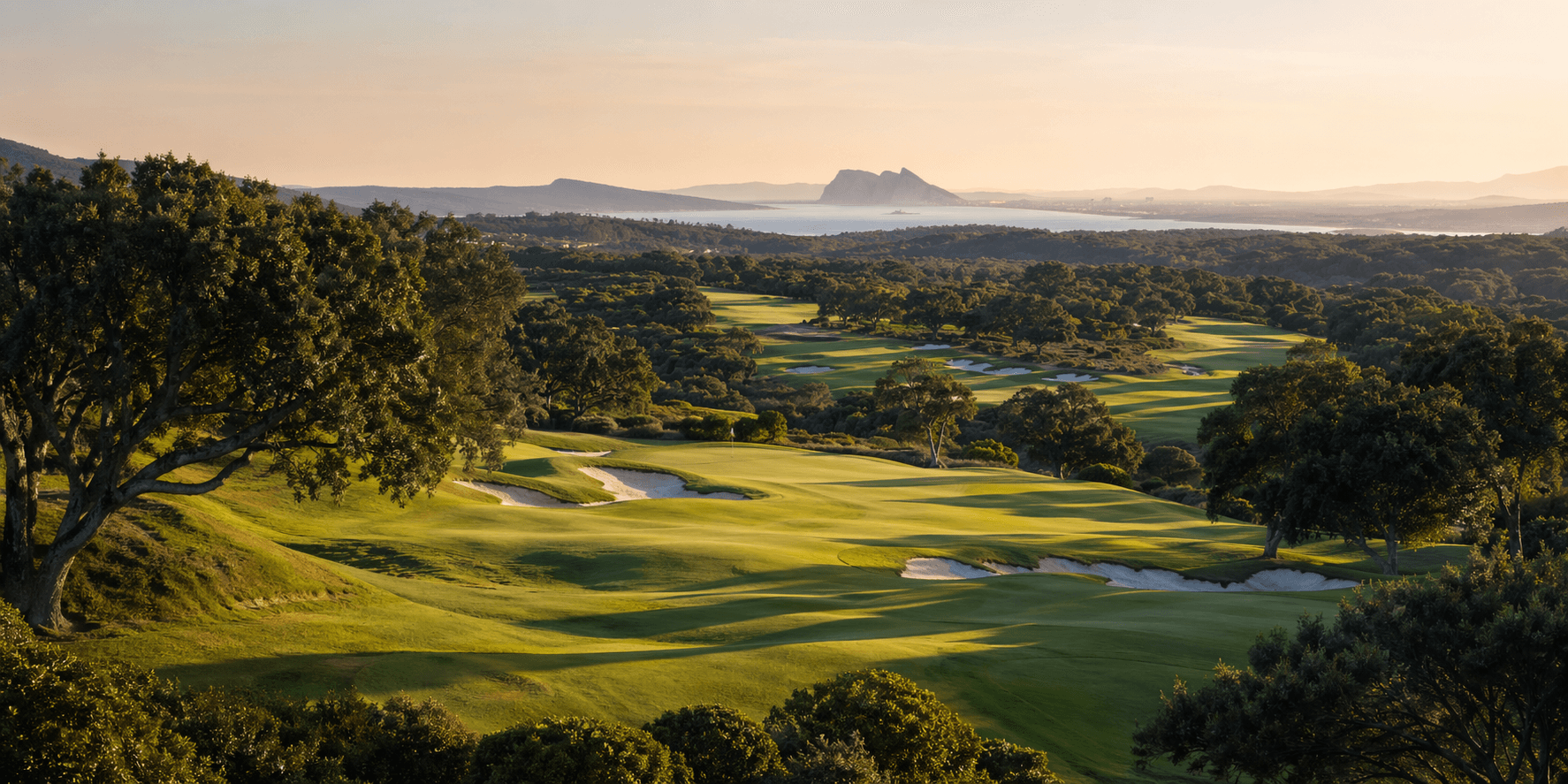
Real Club Valderrama stands as the undisputed pinnacle of continental European golf. Carved through a dense cork oak forest in the hills above Sotogrande, this Robert Trent Jones Sr. masterpiece has hosted the 1997 Ryder Cup, seventeen Volvo Masters, WGC American Express Championships and, most recently, the Estrella Damm Andalucía Masters. Jaime Ortiz-Patiño bought the club in 1985 and rebuilt it into what many still call the Augusta National of Europe, obsessing over turf quality, shot values and presentation in ways few other clubs in the world can match.
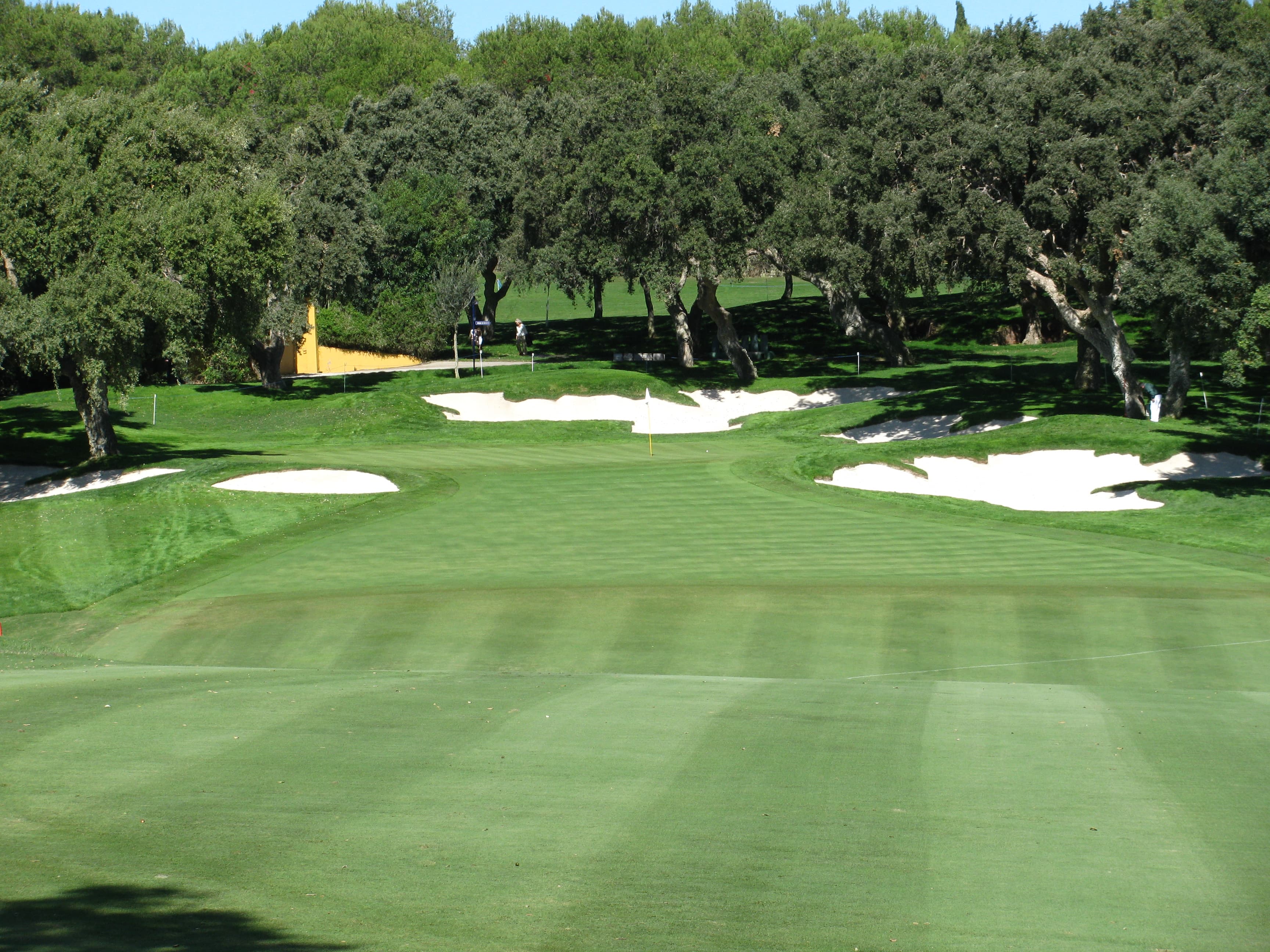
The course demands precision over power. Narrow tree-lined fairways, firm greens, and water that enters play at the exact moments when your nerve is already fraying mean that Valderrama is a shot-by-shot chess match rather than a driver-first bombing range. From the moment you pull through the gates off the A-7 to the final handshake on 18, every detail is considered: the raked bunker lips, the striped fairways, the caddies in pressed whites, the single yellow tee marker on the first hole. You do not blast your way around Valderrama. You negotiate with it.
Course photography
The experience
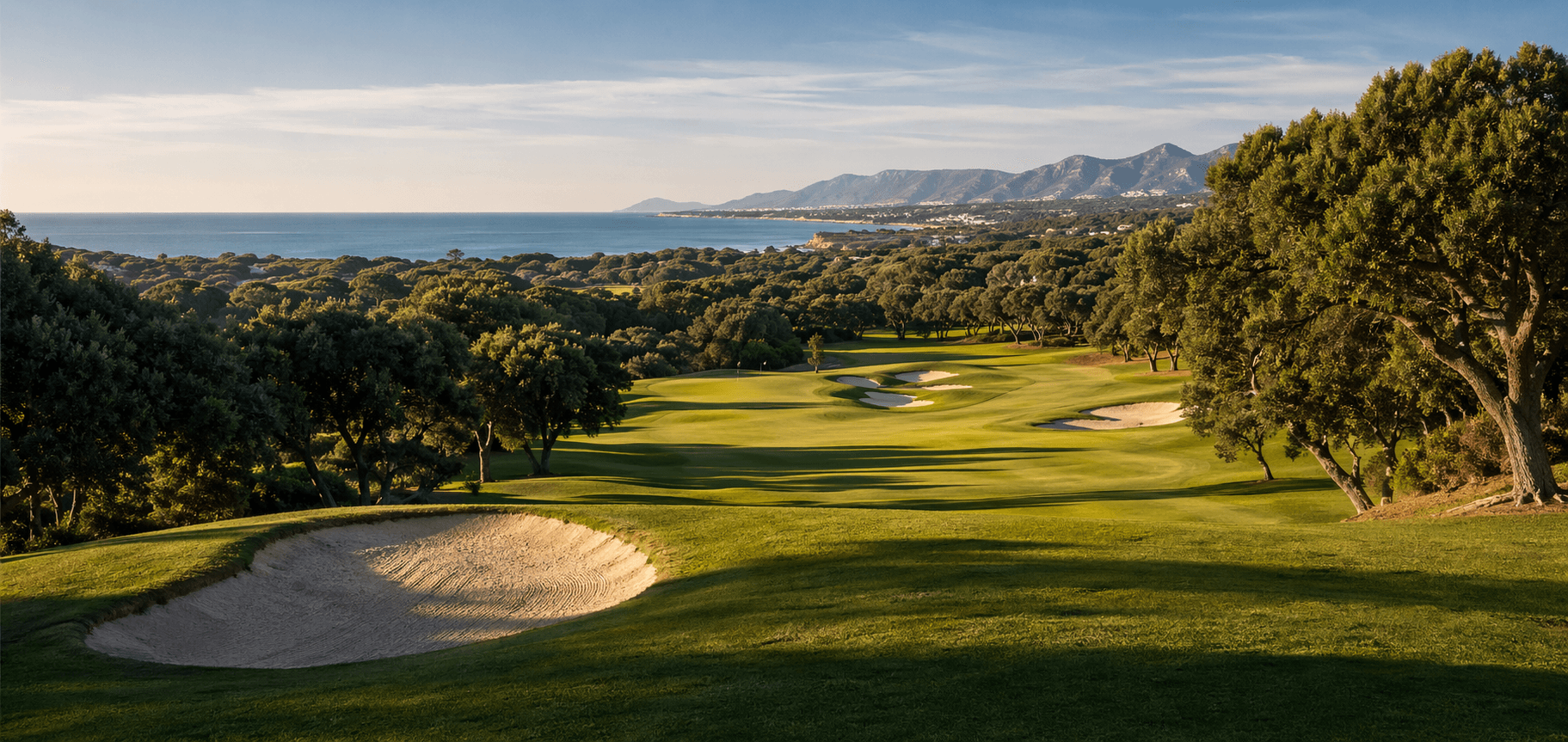
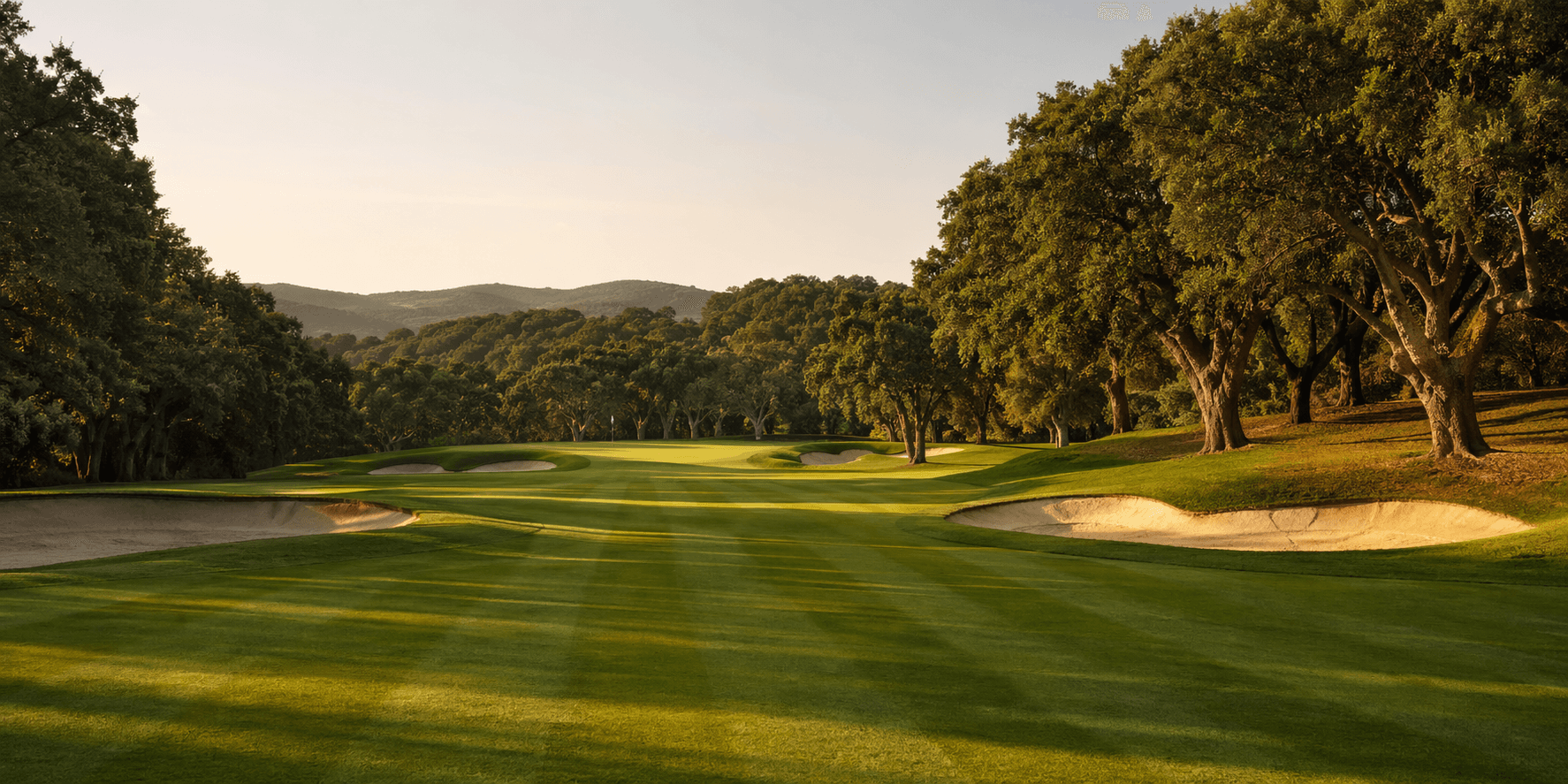
Playing Valderrama is an exercise in strategic golf at its finest. The cork oaks that line every fairway create cathedral-like corridors that demand accuracy off the tee, and anyone who arrives expecting to swing aggressively is quickly re-educated. Position is everything. The greens are fast, true, and subtly contoured, with run-offs that feed balls into collection areas where up-and-down is a genuine skill test.
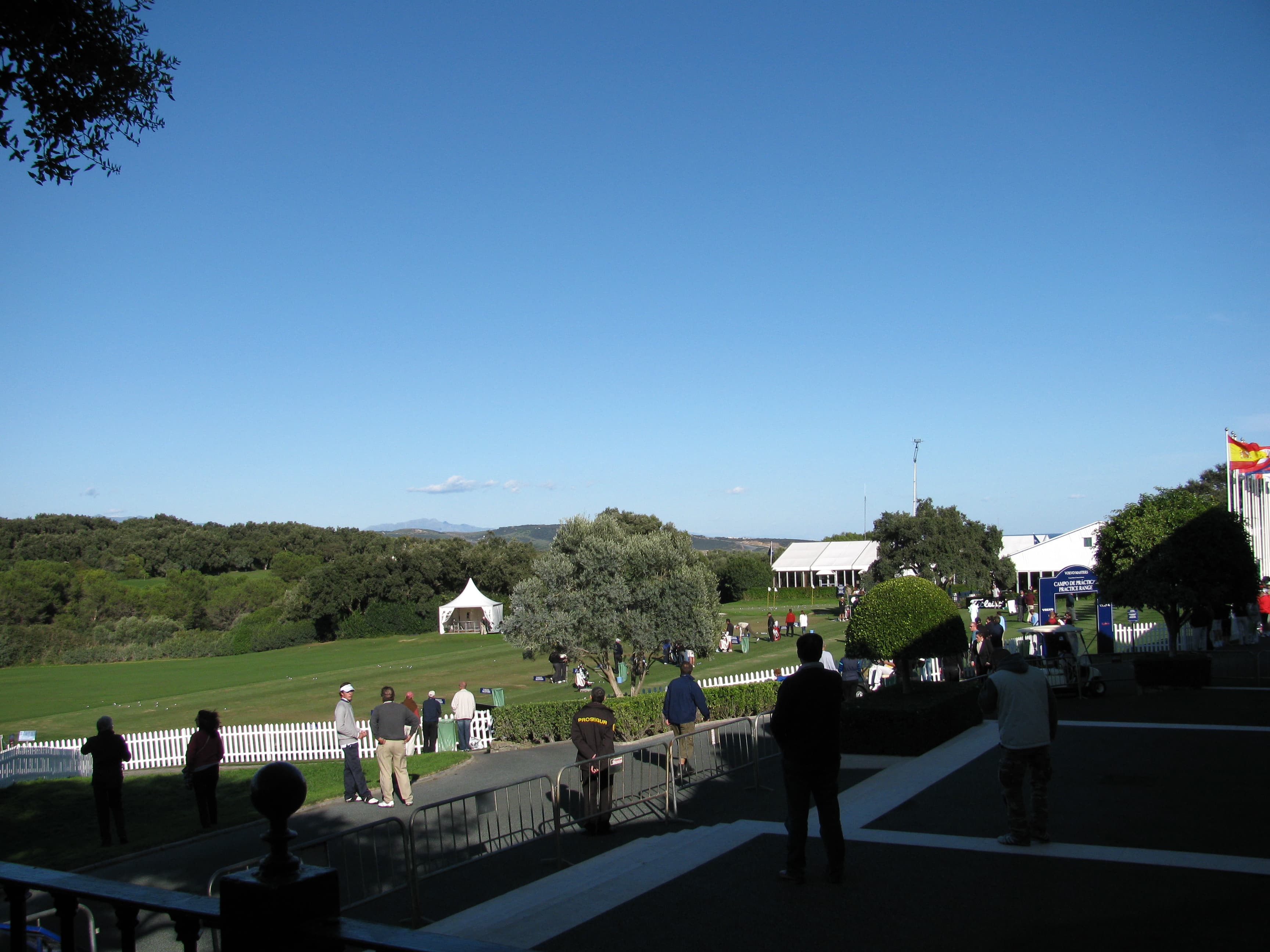
The caddies are among the best in Europe and essentially compulsory for first-time visitors. They know every break, every yardage, every line off the tee where the trees will still let you through. The pace is unhurried, the service impeccable, and the halfway house between nine and ten offers a pause with views across the Andalusian hills. The whole day has a slightly formal, grown-up feel that rewards the players who treat it that way. This is not a course that rewards aggression. It rewards intelligence, patience, and the ability to shape the ball both ways.
Routing & design
The routing climbs gently from the clubhouse into the hills, turns at the halfway house, and works its way back through the tighter inward corridors. The first three holes are a deliberately measured introduction: a straightaway par-4, a testing par-3, and the par-5 3rd that starts hinting at how narrow the cork-oak lines actually are. From the 4th onwards the course's full strategic intent reveals itself, with dog-legs that penalise the straight tee shot and short par-4s that ask more than they look like asking.
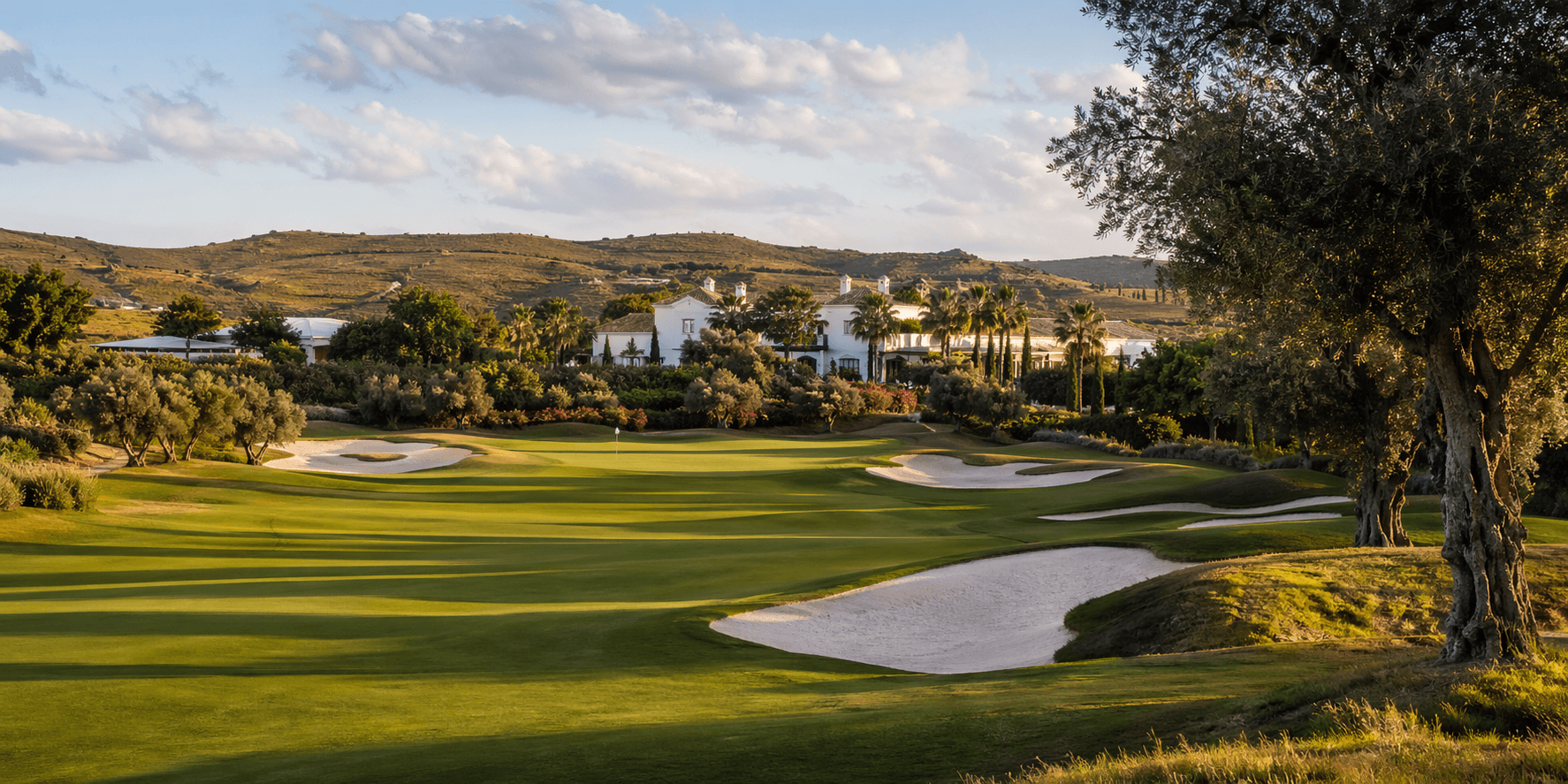
The greens are the constant protagonist. Most are small by modern championship standards, many are crowned, and the run-offs mean a missed green rarely leaves a straightforward shot. Firm bounce areas around the collars make pitch selection a real skill test. The overall yardage of 6,951 under-sells the difficulty — this plays considerably longer because so many second shots are forced-lay approaches rather than full-send clubs.
Key stretches
Holes 4–6 — the first proving ground
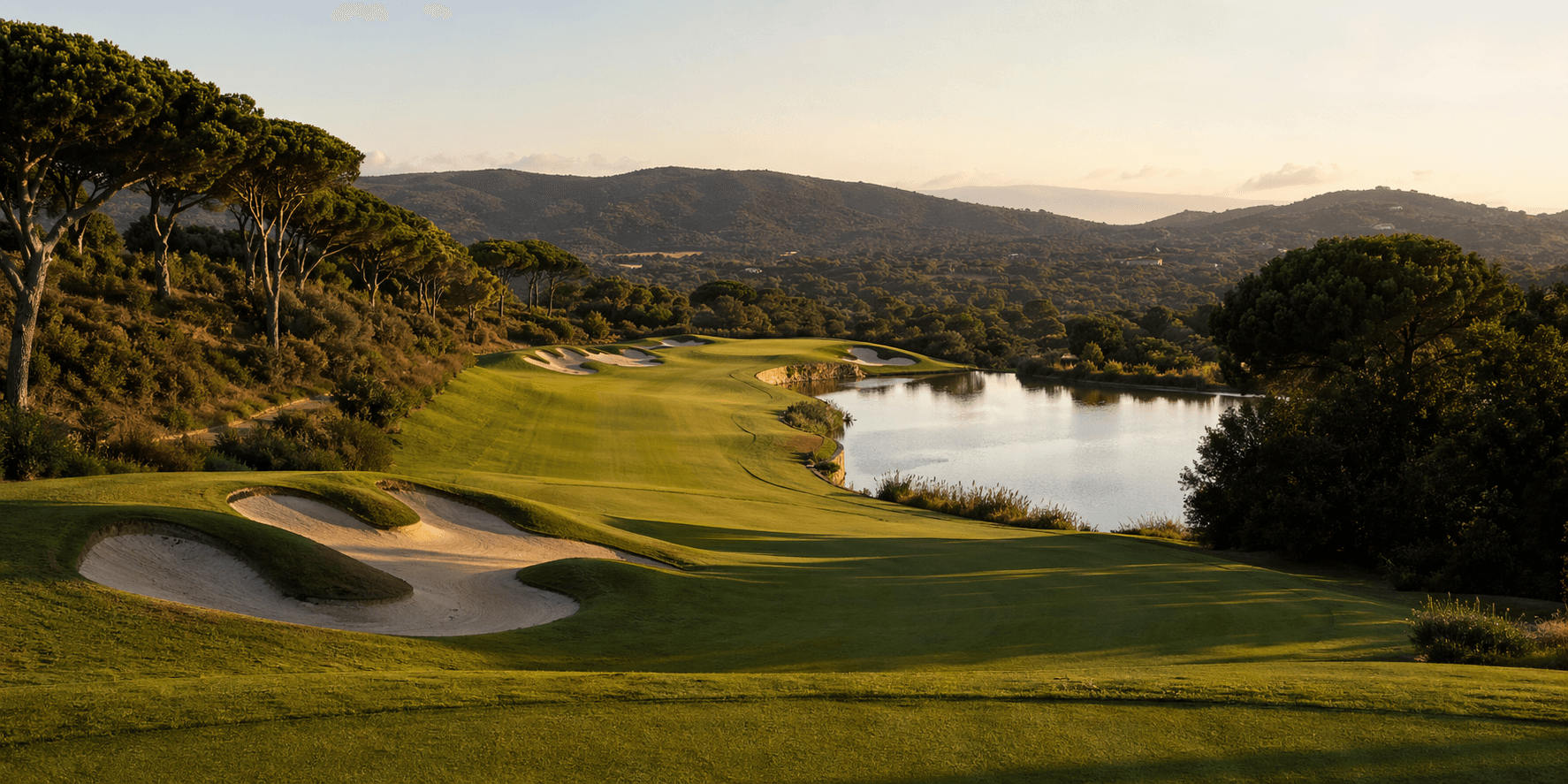
The par-5 4th with its lake-guarded green is the first real decision of the round, immediately followed by the long par-4 5th that demands a precise drive between trees, and the uphill par-3 6th where club selection is rarely obvious. Playing this stretch in level par feels like a small victory.
Holes 10–12 — the forest tightens
The inward nine begins with the toughest par-4 on the card, followed by the risk-laden par-5 11th and the downhill par-3 12th played into a cork-oak amphitheatre. The corridors feel visibly narrower here than on the front, and the wind, when it is up, swirls unpredictably between the trees.
Holes 16–18 — the Ryder Cup finish
A short but severe par-4 16th leads into Los Gabiones, the short par-5 17th with a lake eating into the front of the green that has decided more European professional tournaments than almost any hole in Spain. The 18th is a long uphill par-4 that punishes a loose drive and rewards nothing. This is the sequence every Valderrama round is quietly building towards.
Signature holes
The par-5 4th is a risk-reward masterpiece with a green protected by water on the left that has swallowed the hopes of countless professionals. The short par-3 12th plays downhill to a green surrounded by bunkers, with the backdrop of the cork forest creating a uniquely intimate amphitheatre. But it is the 17th, Los Gabiones, a short par-5 with a lake guarding the front of the green, that defines Valderrama. It is here that Ryder Cup matches have been won and lost, and where your round will likely be decided.
Hole by hole
The lake — first real ask of the day
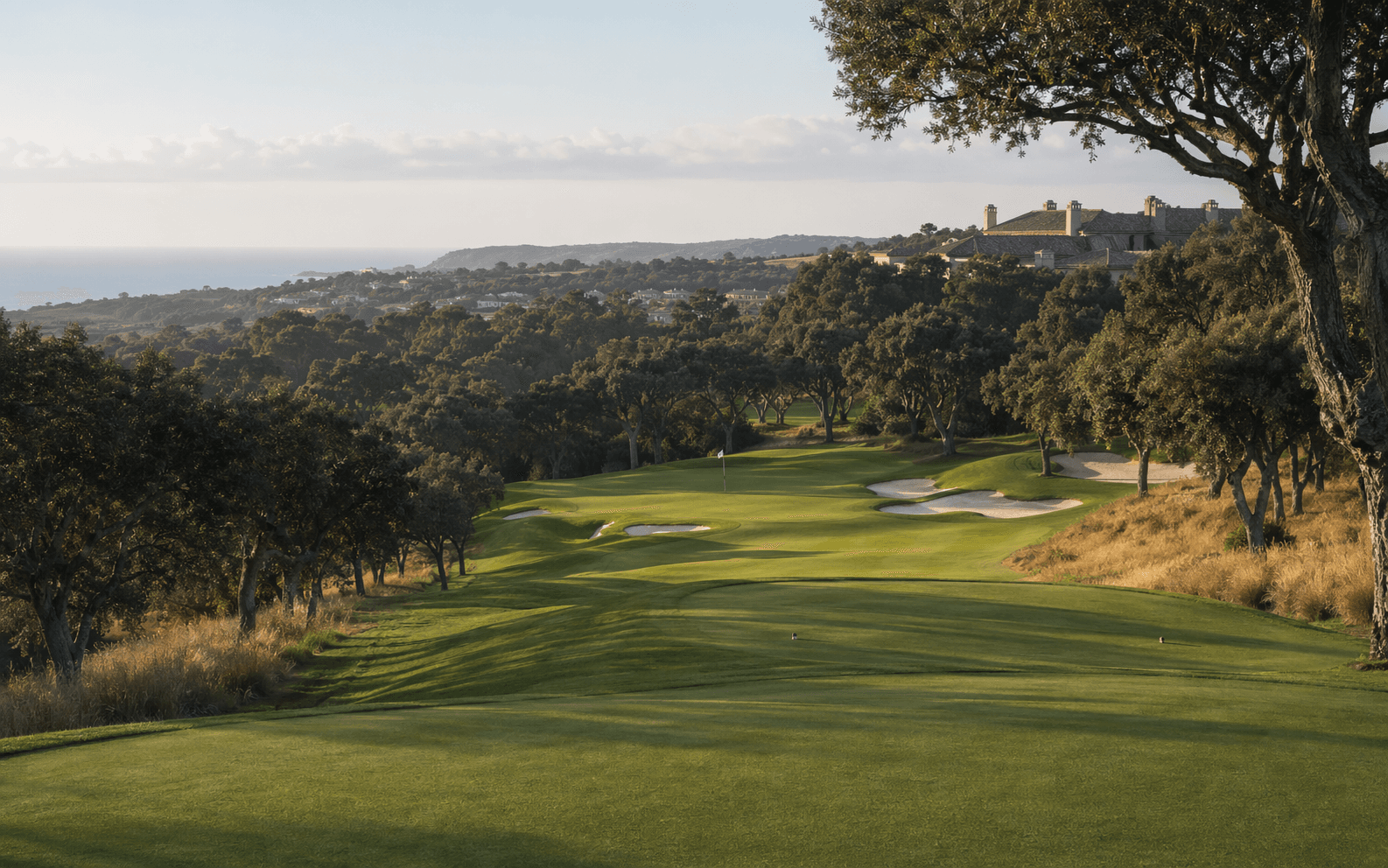
A downhill par-5 that invites a brave lay-up down the left, where water tightens the angle to a small green set behind a spine of trees. The conservative right-side option leaves a longer, blinder third. A hole that quietly sets the tone for how the rest of the round has to be played.
The downhill amphitheatre
A short par-3 that plays eight to ten yards less than the yardage because of the drop. The green is ringed by bunkers and backed by a wall of cork oaks that kills the wind and the noise. One of the prettiest mid-round holes in European golf.
Los Gabiones — Ryder Cup history
The short par-5 that has broken more nerves than any hole on continental Europe. A reachable second shot is guarded by a lake eating into the front and a narrow, angled green with a shaved back edge. Tiger Woods dunked it twice here in 1999. Lay up and you still have a touch pitch to a green that releases away from you.
The uphill closer
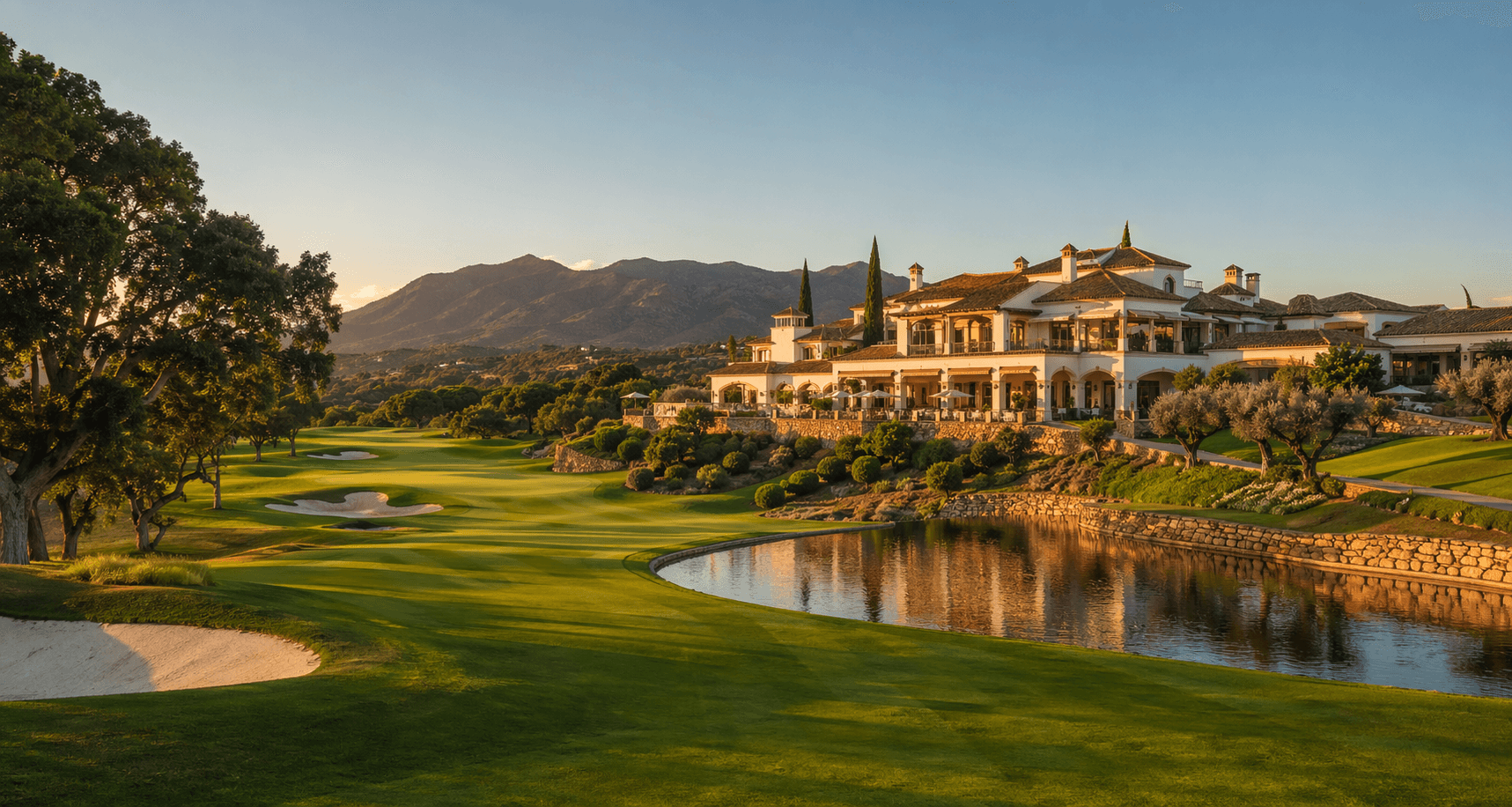
A long, rising par-4 between cork oaks to a green set just below the clubhouse terrace. Most visitors arrive tired and still needing one more precise tee shot. The hole rewards nothing and punishes the drive that leaks right into the trees.
Practical information
Valderrama is a private members' club with a published 2026 visitor card. The 18-hole green fee is €600. A Valderrama Day package is listed at €950, conditions on enquiry. A PGA professional is €300. A caddie or forecaddie is €70; a buggy is €70; an electric trolley is €25; a hand trolley is complimentary; Callaway rental clubs are €50; range balls are complimentary. One forecaddie per group is mandatory and is paid directly to the forecaddie on the day, plus a gratuity.
The club's English rates page lists visitor times Monday to Thursday from 12:00 to 13:00; the Spanish page on the same site says 12:00 to 14:00. Confirm the day's window when you book. Book through the club's TeeOne page or greenfees@valderrama.com / +34 956 791 200. Dress is collared and tailored — no jeans, cargo shorts or flip-flops. Mobile conversations are forbidden. Non-playing guests may not walk the course.
Confirm handicap limits with the club. Peak months are October, November, March and April. Walking with the mandatory forecaddie is the day the club is set up for. Allow a full sitting including lunch — this is not a course to play and run.
Who it suits
- —Serious golfers who prize architecture and shot values over yardage and theatre.
- —Players comfortable shaping the ball both ways and managing their way around tight corridors.
- —Couples and foursomes willing to pay a premium for a once-in-a-trip headline round.
- —Visitors who will engage with a caddie and walk the course rather than ride a buggy.
Planning notes
- —Book as far ahead as the week will allow. Peak months — October, November, March and April — fill first.
- —Ask for a Monday–Thursday midday tee. Confirm whether the day's window ends at 13:00 or 14:00.
- —Budget the official €600 green fee plus the mandatory forecaddie, not last year's rumour.
- —Leave time for a clubhouse lunch. This is not a course to play and run.
- —Pair Valderrama with one round at Real Club Sotogrande for the architectural contrast.
Where to stay
Staying inside the Sotogrande estate gives the smoothest logistics. SO/ Sotogrande Spa & Golf Resort has the strongest spa and food offer in the immediate area and sits ten minutes from the first tee. The Almenara Hotel within Sotogrande is a quieter, more traditional option with its own short course and direct access to the wider corridor.
For groups, the private villa stock in Sotogrande Alto and the old Sotogrande area is some of the best in southern Europe: discreet, gated, and designed for this kind of trip. If the itinerary stretches west, the Kempinski Hotel Bahía in Estepona puts you on the beach thirty minutes away and pairs well with Finca Cortesin as a second-base option.
SO/ SotograndeFive-star resort
The strongest all-round base in the corridor. Spa, two golf courses on-site, reliable food, and ten minutes from the Valderrama gate. Best for couples and pairs, and the default recommendation for first-time Sotogrande visitors.
Private villas in Sotogrande AltoGroup stay
Discreet gated villas with pool, concierge and driver services. The right call for foursomes, work trips and multi-generational groups. Plan on eight to sixteen guests and a week-long stay to make the economics work.
Kempinski Hotel Bahía, EsteponaBeachfront alternative
Thirty minutes west, on the beach, and useful if the trip also wants Finca Cortesin in the itinerary. Quieter, more European-family feel than the heart of Marbella.
Where to eat
Keep dining anchored to Sotogrande and the marina. Cancha at SO/ Sotogrande is refined, course-view dining with a strong Andalusian wine list. Down at the port, Ke Marina is the reliable seafood room the locals use, and Midorie handles the lighter, more modern evenings. Mara in Puerto Sotogrande is the old-guard marisquería every Sotogrande regular eventually returns to.
The clubhouse restaurant at Valderrama itself is excellent and undersold in most travel write-ups — a lunch there after the round, with a glass of Ribera and the front nine visible through the windows, is part of the experience. For a special dinner, the short drive to Casares gives you Kabuki Raw at Finca Cortesin, the Michelin-starred Japanese room that is worth the trip in its own right.
Cancha, SO/ SotograndeRefined Andalusian
Course-view tasting with a strong regional wine programme. The right place for the post-Valderrama dinner — polished without being formal.
Ke Marina, Puerto SotograndeSeafood, casual
The reliable marina room locals use for long, unfussy lunches. Strong rice dishes and simple grilled fish.
Kabuki Raw, Finca CortesinMichelin, Japanese-Andalusian
Twenty-five minutes away in Casares and worth the drive. A high-end dinner that does not feel like more of the same resort cooking.
Valderrama clubhouseClub lunch
Undersold in most guides. The prawns, the croquetas and a glass of Ribera after the round, with the 18th green out the window, are part of the point of the day.
The verdict
The most important course in continental Europe and still, arguably, the best. Go with the right expectations — precision, caddies, cork oaks, nerve — and it delivers a day unlike anything else in Spain.